

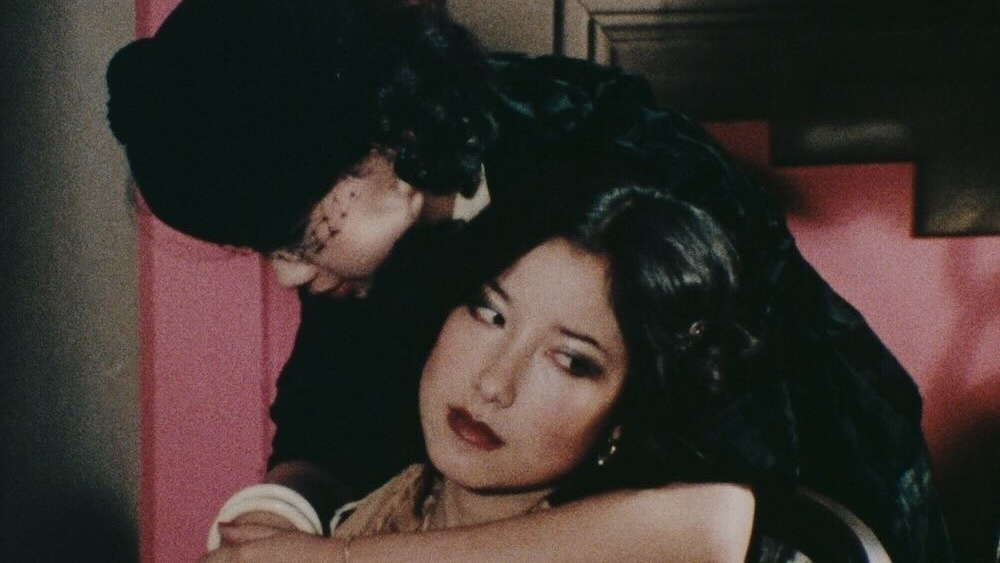
Shades of Silk, Mary Stephen’s directorial debut, a counterpoint to Marguerite Duras’ India Song, screens at the ICA on the 26th, preceded by a shorts programme and followed by the director in conversation as part of Hong Kong Film Festival UK.
After a long hot summer, autumn seems to have arrived all at once. Festival season is charging into view as suddenly as last week’s downpours. Spider-Man and The Odyssey are slowly but surely releasing screens — if you’re in line for the IMAX 70mm tickets, stay in line! — and while no one saw The End of Oak Street, everyone who did wrote their own glowing Letterboxd review about its vulgar auteurism.
September sees the return of the Hong Kong Film Festival, opening on the 25th with the UK premiere of Mary Stephen’s Palimpsest: The Story of a Name at the Barbican. Stephen is this year’s Filmmaker in Focus, a strand that also offers the UK premiere of her first feature Shades of Silk and a pair of Rohmers she worked on, screening at the ICA. Elsewhere, the other pick of the bunch when it comes to rep offerings is My Name Ain’t Suzie, Angie Chen’s decade-spanning Wanchai melodrama, at The Rio.
Fringe! festival is also back , running from the 11th until the 20th across London, opening with Queer Ground, a programme pairing Sian A. Williams Body/Land and Haneem Christian’s Eyes to See at The Rio, and closing with Eva Man, Antonio D’Agostino’s softcore intersex-as-spectacle romp, at the Genesis, introduced by TGirlsonFilm’s Jaye Hudson.
At the BFI Southbank, there are runs devoted to the centenary of cult-favourite Harry Dean Stanton and the bourgeois domestic thrillers of Claude Chabrol, but A Poet with a Camera, a season on the anti-colonial, Pan-African cinema of Sarah Maldoror, curated by her daughter Annouchka de Andrade, is the pick of the bunch. Highlights include When I Don’t Sleep, I Dream which gathers her 1969 debut Monangambé with work spanning three continents; Fiesta, a shorts programme constituting an unofficial carnival trilogy shot in Cape Verde and Guinea-Bissau as both countries built post-independence states; and The Pan-African Festival of Algiers — one of three films she worked on for other directors — which screens with an introduction by Kodwo Eshun.
Contemporary 75, a season marking 75 years of Charles Cooper’s Soho distributor Contemporary Films, begins on the 3rd at the BFI Southbank with a not-yet-sold-out screening of Bleak Moments with director Mike Leigh in conversation. The strand takes place across ten venues until the 11th of October. Other highlights are dotted below, though Wild Strawberries on 16mm at The Castle deserves a special mention.
Highlights
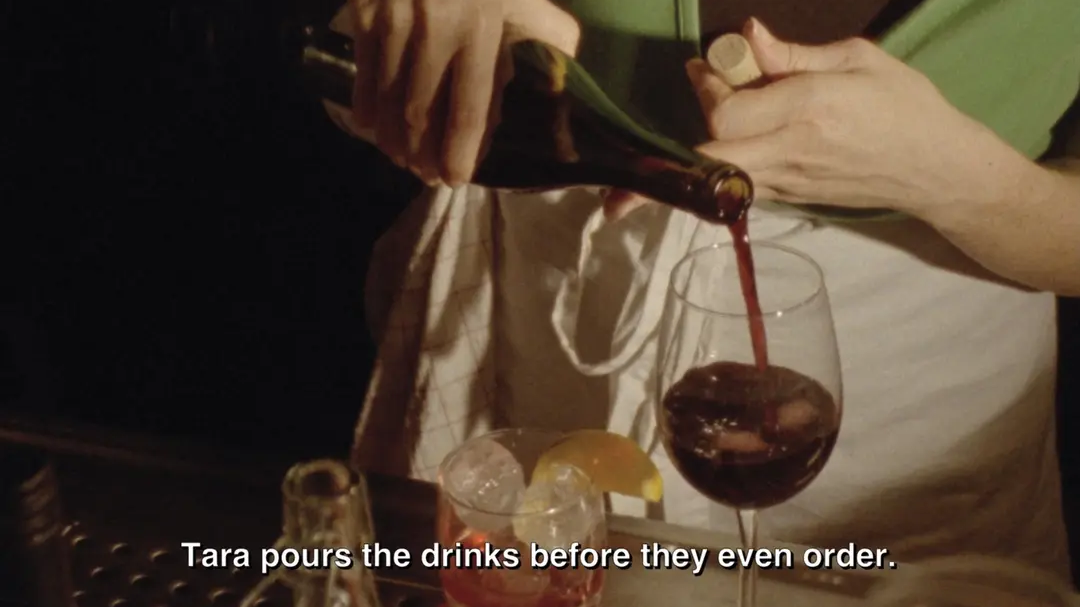
Paradise, a slippery, self-reflexive docufiction shot in a real Berlin bar over three years, plays at the ICA on 16mm on the 9th, followed by a talk with directors Calla Henkel and Max Pitegoff.
On the 2nd, at the BFI Southbank, A Poet with a Camera: The Cinema of Sarah Maldoror, a season devoted to the pioneering, under-seen Guadeloupean-French filmmaker, opens with Poetry in My Soul followed by Sambizanga, Maldoror’s 1972 anti-colonial landmark following a woman’s search for her husband, abducted by Portuguese secret police in occupied Angola. Extreme Private Eros: Love Song 1974 is at Close-Up, Kazuo Hara’s intimate documentary which follows his ex-partner to Okinawa as she raises a child alone, takes new lovers, and gives birth on camera.
On the 4th, Ross McElwee’s Sherman’s March, his Sundance-winning documentary. a shaggy chronicle of failed romance across the American South, begins a short run of a new restoraton at the ICA. King Kong vs Godzilla is at the Barbican for season All Kaiju Attack. Whistle Down the Wind, Bryan Forbes’ 1961 tale of three children who mistake an escaped convict for Christ, plays at the BFI on 35mm, followed by a Q&A with actors Hayley Mills, Diane Poole and Alan Barnes.
On the 7th, Beyond Human Time, an NFTS grad show of films that depict the experience of time from non-human perspectives, opens at Close-Up with Il Buco, Michelangelo Frammartino’s near-wordless docudrama, following a descent into Europe’s deepest cave. Wise Blood, John Huston’s 1979 adaptation of Flannery O’Connor, is on 35mm at the BFI Southbank, an early offering from season A Road Less Travelled: Harry Dean Stanton. The Shop on the High Street plays as part of The Garden Cinema’s season on the Czechoslovak New Wave.
On the 9th, Paradise, a slippery, self-reflexive docufiction shot in a real Berlin bar over three years, screens at the ICA, followed by directors Calla Henkel and Max Pitegoff in conversation. Presented by Distorted Frame, Rachel Getting Married, Demme’s handheld wedding-in-chaos drama, screens with an intro from Pamela Hutchinson at The Castle Cinema. Quo Vadis?, Guazzoni’s Roman epic screens at The Cinema Museum with live piano accompanied, joined by a programme of similarly classical-themed shorts on 35mm.

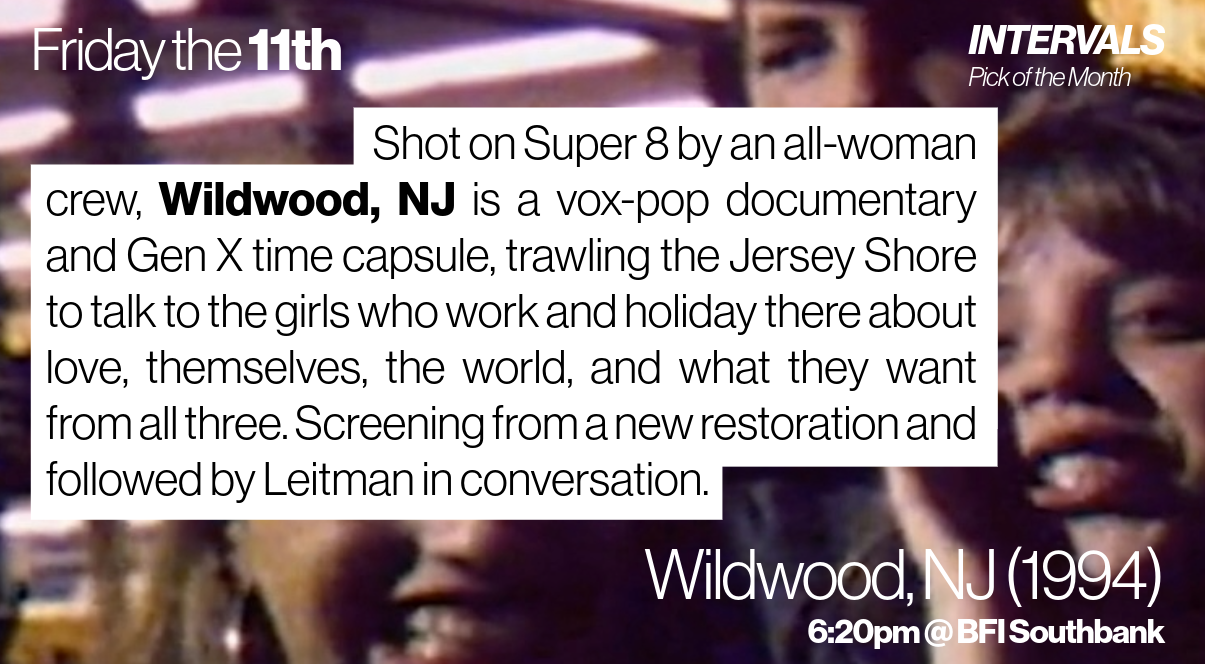
On the 11th, Wildwood, NJ, Ruth Leitman and Carol Weaks Cassidy’s candid Super 8 love letter to the New Jersey boardwalk and the hopes and dreams of the women who holiday there, screens as part of BFI Southbank‘s Woman with a Movie Camera strand, with director Ruth Leitman in conversation. Sepúlveda and Adriazola’s fabulist fiction film about the making of an “artistic documentary” following Chile’s army equestrian unit, Cuadro negro, is at Close-Up introduced by ICA cinema curator Cici Peng. Hoxton’s Hundred Years Gallery hosts Food on Film, an experimental shorts programme treating food as material, provocation and mess, featuring work from Roger D. Wilson, Dan Browne, and Megan Hattie.
On the 12th, Category H returns to The Rio with a double bill of Malatesta’s Carnival of Blood, Christopher Speeth’s 1973 cult oddity of ghouls and vampires haunting a derelict Pennsylvania amusement park, and the similarly carnival Final Destination 3. Alex Cox’s punk sci-fi comedy, Repo Man, is at the BFI Southbank for its Harry Dean Stanton season. Miloš Forman’s A Blonde in Love plays at The Garden Cinema, presented by Contemporary 75.
On the 13th, at The Cinema Museum, Lost Reels presents Women on the Edge, an all-day event of four films — Winterbottom’s Butterfly Kiss, Todd Haynes’ Safe, Karyn Kusama’s Girlfight, and Lynne Stopkewich’s Kissed — following women living beyond boundaries, screened mostly from 35mm with filmmaker Q&As. In Protest of the Bomb is at The Rio, a double bill of anti-nuclear-activism documentaries from the 1950s and 1980s, screening as part of Contemporary 75. Dance, Girl, Dance, Dorothy Arzner’s backstage burlesque comedy starring Lucille Ball and Maureen O’Hara, is at the BFI on 35mm.
On the 17th, Frowzy Films, a new endeavour from Category H’s Molly Miles and Scour Cinema’s Pete Cann exploring microbudget genre cinema, opens with Showgirls 2: Penny’s from Heaven at the Prince Charles Cinema. From Saint-Denis to Algiers, a double bill of Sarah Maldoror’s Le passager du Tassili and her short Abbaye royale de St. Denis, screens at the BFI Southbank with an intro from Professor Arthur Asseraf. Dino Risi’s Il Sorpasso screens at The Cinema Museum, presented by Ghost Light Cinema.
On the 22nd, the BFI Southbank‘s Bryan Forbes at 100 strand continues with The Wrong Box, screening from Peter Sellers’ personal 16mm print. Martin and Lewis’s Living It Up, a Technicolor screwball remake of March and Lombard’s Nothing Sacred for the atomic age, is at The Cinema Museum, presented by I’ll Say She Is!.
On the 24th, a big day for those interested in information vegetable, animal and mineral: the BFI Southbank’s Experimenta strand hosts Maeve Brennan for a screening of her “study of territory”, Siticulosa, which is placed in conversation with Desmond Bell’s Hard Road to Klondike. Beyond Human Time continues at Close-Up with Last Things, Deborah Stratman’s geohistorical inquiry into evolution and extinction told from the perspective of rocks and minerals, joined by short Resistance, Laurence Favre’s wordless 11-minute study of a melting Swiss glacier. Have a Gd Trip present the seminal skateboard film Yeah Right! at The Prince Charles Cinema.
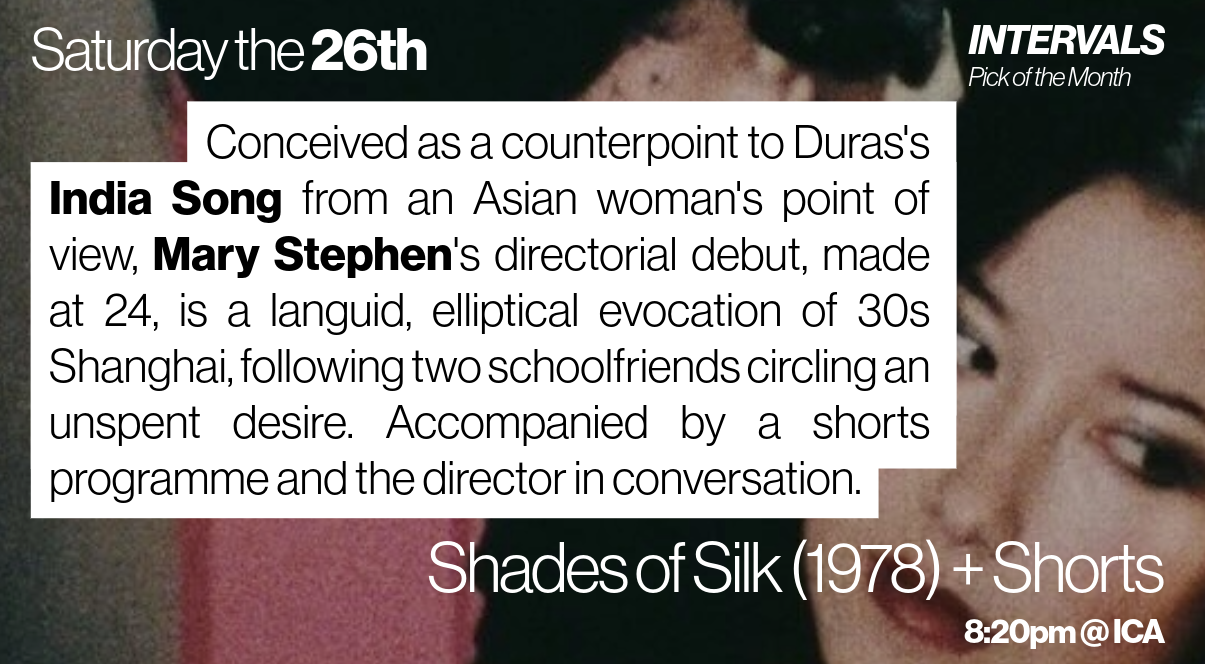
The 26th: one of those days when it seems silly to be anywhere but the ICA: proceedings start with the opening salvo of a Michael Snow and Joyce Wieland weekender — Back and Forth and To Lavoisier, Who Died In The Reign of Terror are followed by La Raison Avant La Passion and A&B in Ontario — all on 16mm. Then the Hong Kong Film Festival takes over for the evening with Rohmer’s The Aviator’s Wife screening as part of a showcase on the work of editor Mary Stephen, who served as assistant editor on the shoot. After that, Shades of Silk, her 1978 directorial debut, an homage to Duras’ India Song told from the perspective of the colonised, has its UK premiere, preceded by a shorts programme and followed by a Q&A with the director. If you’d rather be elsewhere than The Mall, the latest iteration of Close-Up’s Against All Odds strand, curated by Karel Doing and Beth Hansen, focuses on the work of Basement Films, Albuquerque‘s volunteer-run microcinema.
On the 27th, Hong Kong Film Festival’s tribute to Mary Stephen continues at the ICA with Rohmer’s A Summer’s Tale on 35mm, which is preceded by the closing film of Five Films from Michael Snow and Joyce Wieland — Rameau’s Nephew by Diderot (Thanx to Dennis Young) by Wilma Schoen. Over in Kensington, Ciné Lumiére‘s tribute to Nathalie Baye has Godard’s Every Man For Himself.
On the 29th, at Close-Up, Hong Kong Film Festival UK continues with City Like Water, a programme of experimental artists’ moving image responding to Dorothy Tse’s novel of the same name, featuring work by Bo Choy, Chan Hau Chun and Florence Yuk-ki Lee. King Rat, Bryan Forbes’ 1965 adaptation of James Clavell’s novel, is projected from 35mm and introduced by Forbes’ daughter, Sarah Standing, as part of the BFI Southbank’s season on the actor, writer, director and producer. At The Cinema Museum, I’ll Say She Is! returns with You’re Never Too Young, a gender-swapped riff on Wilder’s The Major and the Minor, directed by Norman Taurog and starring Dean Martin and Jerry Lewis.
White Cube

Bahar Noorizadeh: The Debtor’s Portal, a two-part exhibition featuring the installation Free to Choose, a “financial science-fiction opera”, opens on the 25th at The Showroom.
From the 23rd until January you can find Amar Kanwar at The Serpentine, a show featuring three large-scale film works — including a new seven-screen piece making its debut — occupying the whole of Serpentine North.
From the 23rd until Saturday the 26th, Lawrence Abu Hamdan takes over the Barbican’s Pit gallery with Zifzafa, a video-game reconstruction of the occupied Golan Heights in which field recordings of daily Jawlani life are drowned by the simulated roar of a proposed Israeli wind farm. Alongside it, Wind Ensemble films the saxophonist Amr Mdah playing from a balcony fifty metres from the development site.
Opening on the 25th, The Showroom hosts Bahar Noorizadeh: The Debtor’s Portal, a two-part exhibition pairing the film installation Free to Choose, a “financial science-fiction opera”, imagining the banking sector as time machine, with The Space of Flows, a sculptural work that projects video fragments onto a car wreckage, spatialising the themes of the film installation, narrating “the economic cycles of bubble, boom and bust”.
Forum
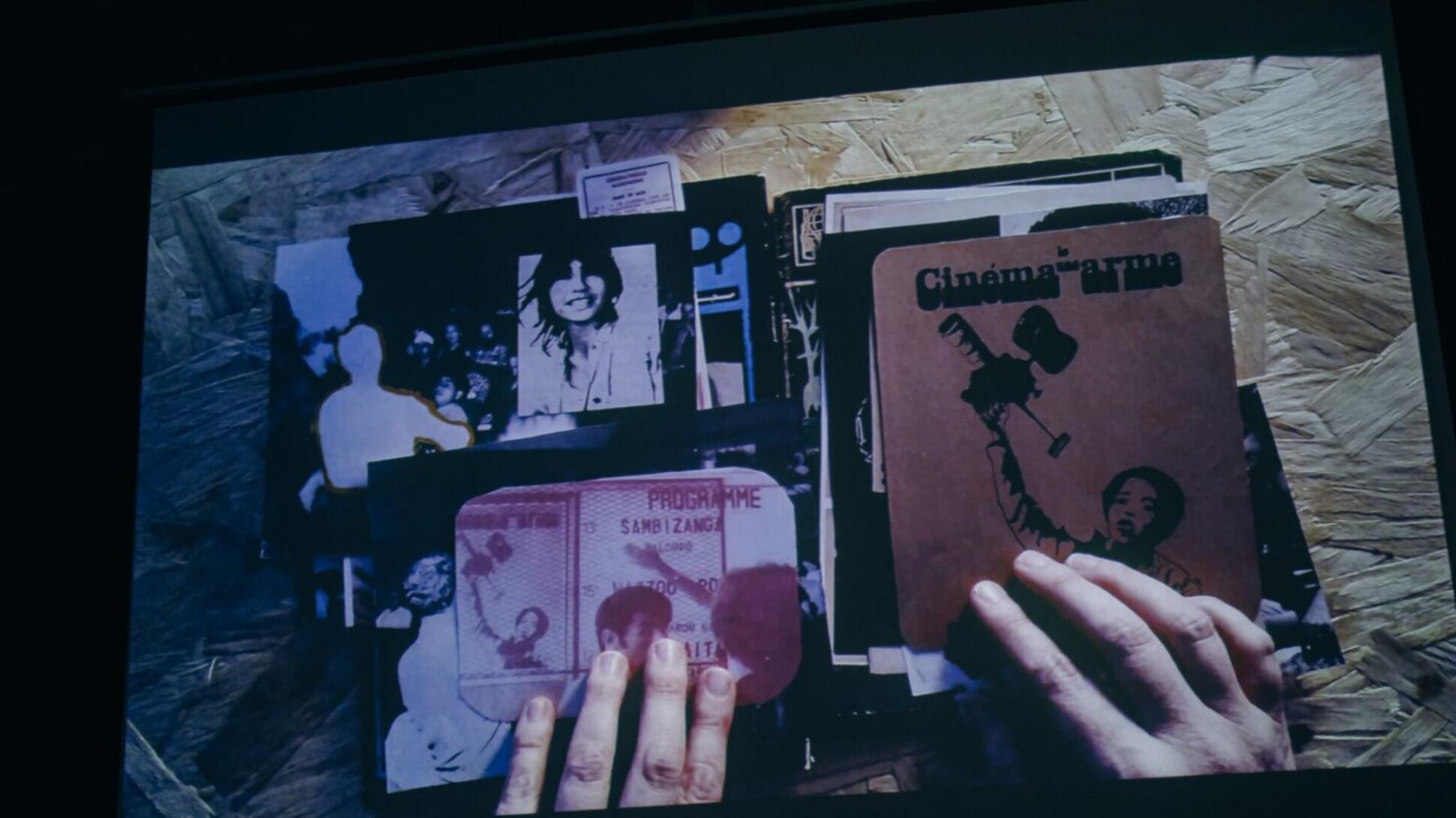
On the 5th, HAVANA: The Tricontinental Conference 1966, a performance-lecture by curator Léa Morin kicks off season Project a Black Planet’s final weekend at the Barbican.
On the 4th, the BFI Southbank hosts Forbes at 100 Symposium, a day-long gathering of academics, writers and filmmakers examining Bryan Forbes’ career, led by Dr Josephine Botting in collaboration with Brunel University’s Media, Culture & Politics Research Group.
On the 5th, the Barbican‘s Project a Black Planet presents HAVANA: The Tricontinental Conference 1966, a performance-lecture by researcher and curator Léa Morin, speculatively reconstructing BASTA, a historical fresco of anti-colonial liberation movements that Mehdi Ben Barka never lived to make, its plans found in his briefcase after his abduction in Paris.
On the 30th, the Birkbeck Cinema hosts writer, researcher and programmer Suyin Haynes for Cinematic Crossings: Expanding the Map of Southeast Asian Cinema, a visual talk tracing the movement of filmmakers, performers and stories across the Philippines, Singapore, Malaysia and Hong Kong over seven decades, part of Hong Kong Film Festival UK’s fourth edition.
Until next time