


On the 21st, I Am Furious Black, the Barbican’s season on documentarian William Greaves, opens with Nationtime, his record of the 1972 National Black Political Convention in Gary, Indiana, a portrait of Black political ambition at its most radical and divided.
October is a month for Black history and things that go bump in the night. On the one hand, a season for what terrifies us, what sends a chill down the spine, what we’d rather turn away from; on the other, a season for showing scary movies (editor’s note: the person writing this is a Black man). Besides the London Film Festival — our guide is over here — it’s also when programming steps up a gear: unseasonable warmth aside, with the nights drawing in, autumn is here and the nights are for diving into the deeper darkness of the cinema. A whole slew of other festivals are waiting in the wings, offering more than enough to carry us through to Christmas.
The Barbican‘s season on William Greaves, I Am Furious Black, is the month’s biggest highlight, running from the 21st into late November. There’s a preview screening of the filmmaker’s early work for the US Information Agency at the end of the week, grabbing Liani and David Greaves whilst they’re in town doing press for Once Upon a Time in Harlem. It’s joined later in the month by Symbiopsychotaxiplasm: Take One, perhaps his most famous work, a hyper-meta 1968 experiment, which is introduced by filmmaker Jessica Sarah Rinland. Highlights beyond October include a double bill of Souls of Sin & Miracle in Harlem — both on 35mm — with Greaves on the other side of the camera, and Losing Ground, directed by his one-time assistant and editor, Kathleen Collins.
At the ICA, The Lower Depths: The Cinema of Shōhei Imamura, the first major UK retrospective of his work in a quarter of a century, opens at the end of the month, running into December. Things kick off on the 22nd with Stolen Desire, his debut; other highlights from this month are dotted below, but ahead of time it’s worth circling the 17th November for a double bill: Karayuki-san: The Making of a Prostitute on 16mm, followed by Kazuo Hara’s The Emperor’s Naked Army Marches On — a febrile, gonzo documentary encounter initiated by Imamura and funded by his own production company.
Seasons on Billy Wilder and Roger Corman are part of BFI Southbank‘s post-festival offer. Almost Perfect, the Wilder retrospective, starts on the 19th and runs to the end of the year. Movie Maverick marks Corman’s centenary with six weeks of B-movie largesse. Its centrepiece is the seasonally appropriate Poe cycle, starring Vincent Price: House of Usher, The Pit and the Pendulum, The Masque of the Red Death. Closing things out is Fear of the Dark, a season built on Lola Young’s landmark study of how cinema has pictured Black women, desire and interracial love. Curated by Clive Chijioke Nwonka, it opens with social-problem pictures Sapphire and Flame in the Streets, before November brings titles such as Mona Lisa, Saint Omer and Kokomo City. Young herself appears in conversation on the 26th.
At the Garden Cinema, Made in Taiwan, a season of Taiwanese cinema now in its fourth year, also launches at the end of the month, this time built around the cinematographer Mark Lee Ping-bing, who’s flying in for Q&As in December. Before that come King Hu’s newly restored Raining in the Mountain on the 25th; a new restoration of Hou Hsiao-hsien’s Millennium Mambo, on the 30th; and, on Halloween itself, Chen Kuo-fu’s Double Vision, a Taipei serial-killer chiller and the season’s most seasonal pick.
Highlights
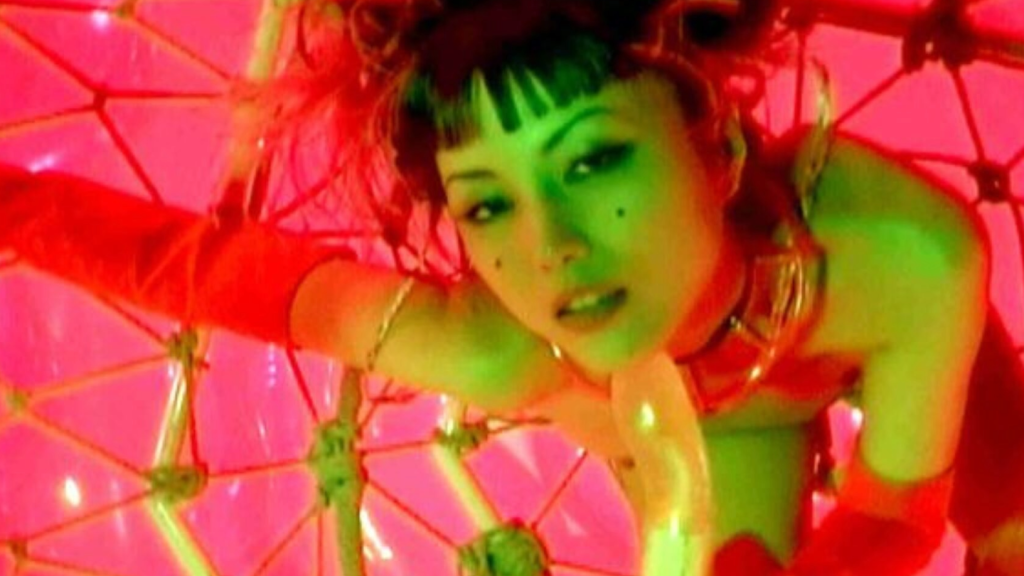
On the 28th, I.K.U, Shu Lea Cheang’s lurid, prescient sci-fi cyberpunk, screens at the ICA for season Collective Visions of Pleasure.
On the 7th, Dyn Amo, Stephen Dwoskin’s 1973 study of performance, desire and the violence of the camera’s gaze, screens on 16mm at the Cinema Museum, introduced by Rachel Garfield, co-editor of Dwoskino: The Gaze of Stephen Dwoskin. At the Barbican, Michelle Williams Gamaker’s Critical Affection Trilogy plays in full for the first time, offering counter histories of the careers of Anna May Wong, Sabu and Merle Oberon against the studio racism that sidelined, stereotyped or forced them to pass, followed by Gamaker in conversation with Dr Kulraj Phullar. Out at UCL East, Film_k presents Rose Troche’s Go Fish, the scrappy, black-and-white Sundance breakout that she and Guinevere Turner made with friends from Chicago’s lesbian scene. Tickets are free.
On the 9th, at Birkbeck, What Work Does Music Do? delves into the Royal Anthropological Institute’s film archive, surfacing four shorts on sound and survival: Bengali scroll singers, a Senegalese instrument-maker, a São Paulo samba school and a young Guinean rapper in Turin. The Barbican previews its William Greaves season, I Am Furious Black, with shorts Wealth of a Nation and From These Roots – a 1964 defence of free speech and a 1974 portrait of the Harlem Renaissance – followed by David and Liani Greaves in conversation with Kodwo Eshun. The Gothique Film Society has a pre-Code and body-horror double bill at the Cinema Museum: Murders in the Zoo and Shivers, pairing Edward Sutherland’s tale of a cuckolded hunter with a private zoo and a grudge with Cronenberg’s tale of venereal parasites running riot through a luxury tower block.
On the 11th, the Rio marks Black History Month with Hyenas, Djibril Diop Mambéty’s last feature, which moves Swiss playwright Friedrich Dürrenmatt’s The Visit to a Senegalese village where an outcast returns obscenely rich and puts a price on the head of the man who wronged her. Contemporary 75 heads up to the Phoenix, a cinema Charles Cooper once owned, for Satyajit Ray’s Mahanagar (The Big City), in which a luminous Madhabi Mukherjee plays a Calcutta housewife who takes a job selling knitting machines door to door and upends her household. It’s introduced by Manishita Dass. Sonic Cinema brings Tony Conrad’s Loose Connection to Cafe OTO, a structuralist home movie of the Midtown flat he shared with LES underground star Beverly Grant and their son Ted, shot by a camera spinning on its mount while the clatter of the street plays underneath. Violinist Billy Steiger opens with a live solo set.
On the 16th, the Rio continues its birthday celebrations with Hackney neighbour Ben Whishaw introducing Goodbye, Dragon Inn, Tsai Ming-liang’s elegy for a rain-soaked Taipei picture palace haunted by cruisers, snackers, ghosts and two of Dragon Inn’s own stars. Some New Kind of Kick serves up The Fat Black Pussycat at the Cinema Museum, a shoestring beat-generation crime picture set in a still-standing Greenwich Village coffeehouse, with a fresh-faced Mac Rebennack (soon to be Dr. John) in the cast. At Birkbeck, the Rebellious Bodies Festival presents a new remaster of Portrait of Mr. O, the first of butoh pioneer Kazuo Ohno’s three films with Chiaki Nagano, a hypnotic dance-documentary that follows Ohno from a school boiler room to a deserted island in Tokyo Bay. Tickets are free.
On the 18th, the Cinema Museum has The Hart of London, Jack Chambers’ elegy for his Ontario hometown, regarded by Stan Brakhage as one of the greatest films ever made, screening on 16mm. At the Garden, Fruits on Film hosts an afternoon of zine-making and drinks ahead of D.E.B.S., Angela Robinson’s lesbian spy caper in plaid. Back in Dalston, the Rio revisits its former life as the Tatler, one of London’s highest-grossing porn cinema clubs. An uncensored grindhouse programme, burlesque show and illustrated talk by Pink Palace’s Andrew Woodyatt are followed by Variety, Bette Gordon’s Kathy Acker-scripted, Nan Goldin-featuring film about a ticket seller at a porn theatre who becomes obsessed with a wealthy patron’s ties to the mafia.
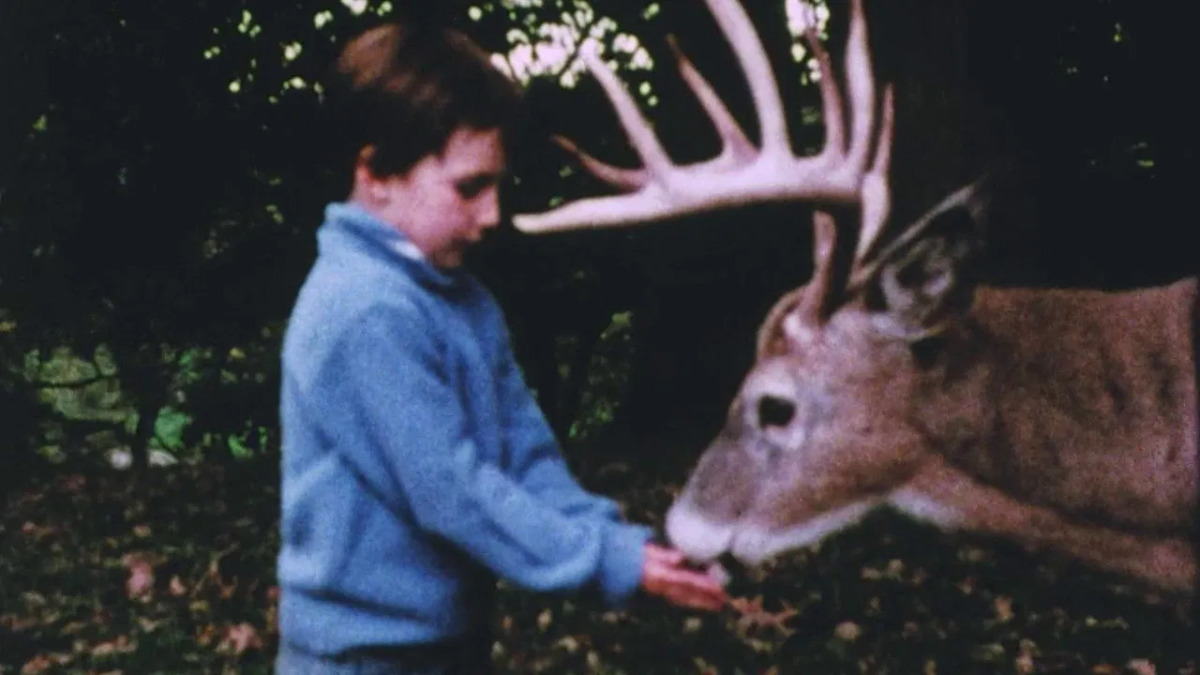
Jack Chambers’s The Hart of London opens with 1954 news footage of a deer that wandered into London, Ontario, then spirals outward into a meditation on birth, death and belonging, folding in footage he shot years earlier in Spain. Made after his leukaemia diagnosis, it’s a film Stan Brakhage counted among the greatest ever made. On 16mm at the Cinema Museum, raising funds to buy its home.
On the 21st, the Barbican‘s Greaves season gets underway proper with Nationtime, his record of the 1972 National Black Political Convention in Gary, Indiana, a portrait of Black political ambition at its most radical and divided, with everyone from Amiri Baraka to Coretta Scott King at the podium and Sidney Poitier and Harry Belafonte narrating. It’s paired with The Voice of La Raza, a docu-fiction hybrid on Mexican American life made with Anthony Quinn. The ICA marks the publication of Arrows of Desire, the first instalment of Peter Wollen’s collected writings, with a screening of his own Friendship’s Death, in which Tilda Swinton plays an extraterrestrial envoy, part robot, stranded in Jordan as Black September breaks out. The book’s editors, Kodwo Eshun, Oliver Fuke and Nicolas Helm-Grovas, are in conversation afterwards. Over in Homerton, Violet Hour pairs Bergman’s Through a Glass Darkly, a bleak island chamber piece about a young woman’s slide back into psychosis, with Kurt Kren’s flickering structural short 3/60: Trees in Autumn at the Castle.
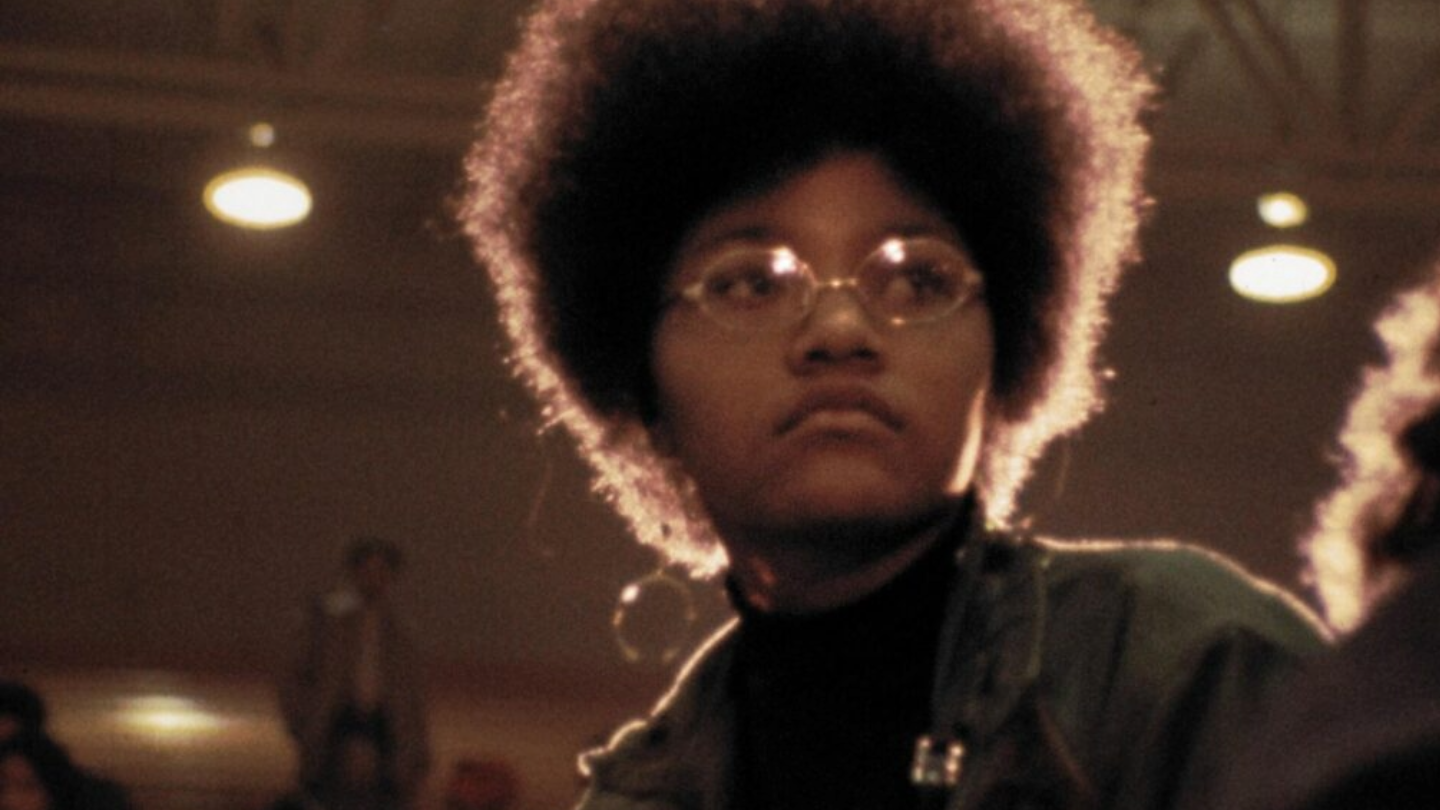
Too militant for TV, Nationtime is Greaves’ shot-from-the-bleachers, impishly edited document of 1972’s National Black Political Convention, a restless attempt to make a constituency out of Black Republicans and Black Panthers. Shirley Chisholm, then running for president, boycotted; Jesse Jackson, attending alongside Betty Shabazz, Coretta Scott King and Isaac Hayes, steals the show, rehearsing for his own doomed runs in the next decade.
On the 22nd, the ICA opens The Lower Depths: The Cinema of Shōhei Imamura, the first major UK retrospective in 25 years, starting at the very beginning with Stolen Desire, his rowdy 1958 Nikkatsu debut, in which a bookish young director falls in with a ragged troupe of travelling players, half kabuki, half strip show, and is torn between two sisters in the company. Cinema of Tomorrow closes its Movies at the Movies fundraising trilogy at the Cinema Museum with Night of the Comet, Thom Eberhardt’s candy-coloured zombie comedy in which two Valley-girl sisters survive the apocalypse by holing up in a cinema and raiding the mall – the template for Buffy. The Rio‘s birthday celebrations continue with a Never Watching Movies screening of Allan Moyle’s Empire Records, the Gen X slacker ensemble about a gang of shop kids fighting to save their record store, followed by Rio staff past and present trading backstage gossip and zines made by the staff on sale.
On the 25th, Made in Taiwan, the Garden Cinema‘s fourth annual season of Taiwanese film, presents a new 2K restoration of King Hu’s wuxia classic Raining in the Mountain, introduced by UCL’s Tom Cunliffe. Down at the ICA, The Lower Depths continues with a double bill from Imamura’s years as a Nikkatsu hired hand: Nishi-Ginza Station and My Second Brother, the first a bawdy farce about a browbeaten husband’s bungled bid for an affair, the second a quietly heartbreaking portrait of four orphans scraping by in a dying coal town. With LFF dispensed with for another year, the BFI Southbank‘s Billy Wilder season, Almost Perfect, screens Howard Hawks’ Ball of Fire on 35mm, from a script by Wilder and Charles Brackett.
On the 26th, Close-Up hosts the 14th edition of The Festival of (In)appropriation, the LA-born showcase for found-footage film and video, with a programme of eleven shorts that rework classroom filmstrips, industrial safety films, Zelda and viral drive-thru clips. At the Garden, Made in Taiwan’s focus on cinematographer Mark Lee Ping-bing continues with Hou Hsiao-hsien’s The Time to Live and the Time to Die, a lightly fictionalised account of the director’s own adolescence in a mainland family adrift in 1950s Taiwan. The Lexi’s Classroom Cinema season opens with Laurent Cantet’s Palme d’Or winner The Class, in which former teacher François Bégaudeau plays a version of himself against a cast of real Paris pupils without ever leaving the school walls. Curator Tom Saer introduces.
On the 28th, at the ICA, Collective Visions of Pleasure screens Shu Lea Cheang’s prescient I.K.U, a lurid, glitch-drenched cyberpunk, following a shape-shifting android who harvests orgasms as data for a sinister corporation. Queer East programmer Emily Jisoo Bowles introduces. Next door, Éditions 1989 launches a new edition of Who Are You Dorothy Dean? with a 40-minute excerpt from Andy Warhol’s Prison, featuring the Factory regular and pioneering New Yorker fact-checker, followed by author Anaïs Ngbanzo in conversation with Róisín Tapponi. The Nickel gets into the Halloween spirit early with Alain Robak’s Baby Blood, a grotty French splatter comedy in which a circus wife carries a parasite with a thirst for blood. Transpointine, South London Gallery hosts Psychobuildings, a programme about what buildings do to the people inside them — Block, Emily Richardson’s surveillance-style vigil of a southeast London tower block, is joined by The Mirroring Cure. Lily Tonge and Leila Arenou introduce.
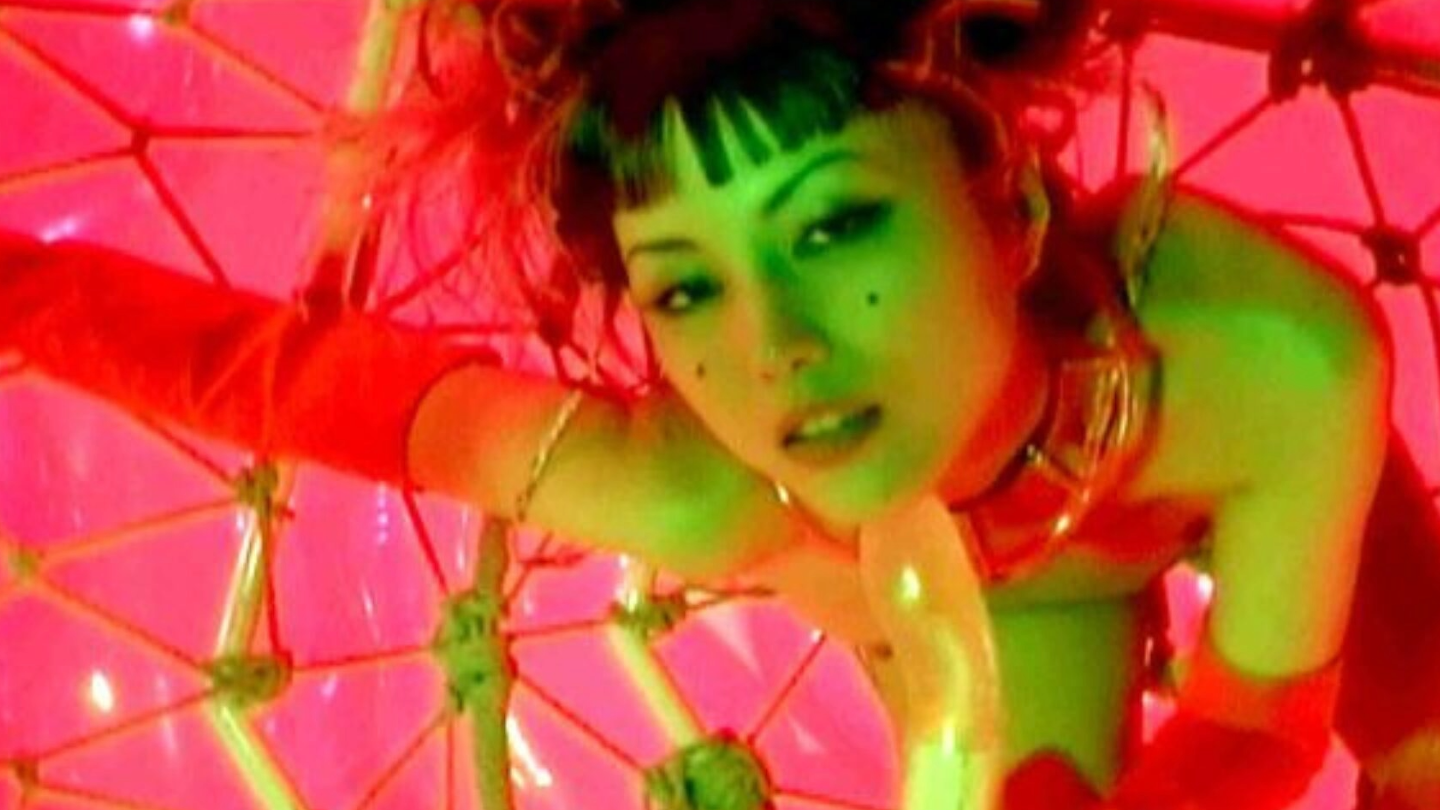
Bankrolled as a sci-fi porno before premiering at Sundance to a wave of walkouts (at midnight, no less), Shu Lea Cheang’s I.K.U. follows a shape-shifting cyborg through New Tokyo, harvesting orgasms as data for a shadowy corporation. The sex is explicit, the plot loose and the visuals pure Y2K, now on trend; the premise, desire mined, commodified and sold back to us, looks less far-fetched as its 2030 setting approaches. Emily Jisoo Bowles introduces.
Boo! It’s Halloween. The ICA‘s Imamura season reaches The Insect Woman, his sprawling, elliptical epic of one woman’s half-century of survival, from farm girl to brothel madam, anchored by Sachiko Hidari. The Garden‘s Halloween programme presents Chen Kuo-fu’s Taiwanese horror landmark, Double Vision, starring Tony Leung Ka-fai and David Morse. Movie Maverick, the BFI Southbank‘s Roger Corman centenary season, serves up The Raven on 35mm, a Poe-by-way-of-Matheson comic caper with Vincent Price and Boris Karloff as duelling sorcerers and Peter Lorre as a man stuck as a bird.
White Cube
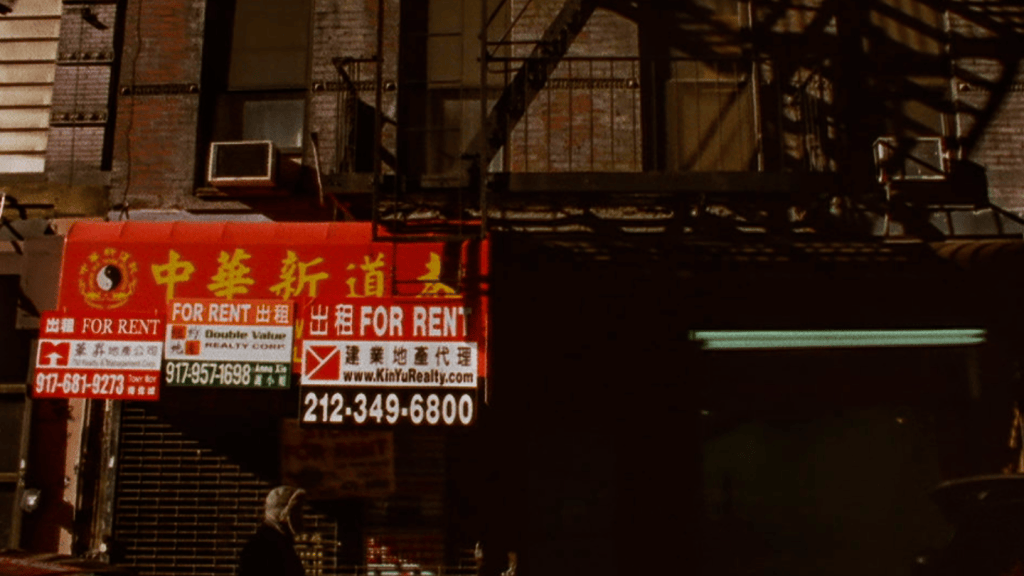
Cell Project Space hosts Jeff Preiss: Orchard Documents from the 8th.
Until the 7th of November, Sadie Coles HQ hosts Martine Syms’s Knot Eye, a show built around two new films from the Los Angeles artist. The centrepiece, RW-LO, is a 22-minute docu-fantasy that splices re-enactments with the home-video archive of Brent David Freaney, who as a teenager in New Orleans’s Garden District in 2000 became fixated on Melissa Howard of MTV’s The Real World: New Orleans. At the front of the gallery, Dominica Publishing, Syms’s long-running imprint, is installed as both artwork and working shop.
Opening on the 8th: Cell Project Space presents Jeff Preiss: Orchard Documents, an exhibition gathering all seven films the filmmaker and artist made at Orchard, the twelve-member cooperative gallery he co-ran on the Lower East Side, opening in protest at Bush’s re-election and shut as the financial crisis hit. Made with fellow members including Andrea Fraser, Anthony McCall, Moyra Davey and Josiah McElheny, each finds a different way to film an exhibition, among them a 16mm Bolex sweeping endlessly back and forth across the room. Off-site: on the 12th Close-Up screens Preiss’ Beckoning Cats and The Secret World, with Dan Kidner in conversation.
From the 9th, LUX opens its LVA50 programme, marking fifty years since the founding of London Video Arts, with Late-Night Conversations: Stuart Marshall & Tamara Krikorian. At its centre are two early installations restaged for the first time in fifty years, and together for the first time: Krikorian’s Breeze (1975), four static shots of water whose surface the video signal itself breaks into high-contrast abstraction, and Marshall’s Privileged View (1976), a study in surveillance and paranoia rebuilt with his original props and readable as a coded coming out. Curators Conal McStravick and Holly Argent surround them with archive material, oral histories and short videos by both artists.
Forum
On the 31st, Erika Balsom is joined in conversation by Lola Lemke, Maria Palacios Cruz and Jonathan Romney to celebrate the publication of The Edges of Cinema, the night after the book’s launch screening of James Benning’s little boy.
On the 26th, the BFI Southbank launches a new season with its source: Baroness Lola Young, the academic and crossbencher whose 1996 book Fear of the Dark: ‘Race’, Gender and Sexuality in Cinema took British film to task for the way it has pictured Black people, Black women above all, from the imperial adventure yarn to the race-problem dramas of the postwar years. Thirty years on, she looks back at what the book set in motion and turns its arguments on the films being made now, in conversation with season programmer Clive Chijioke Nwonka.
On the 29th, artist Jenkin van Zyl sits down with Goldsmiths theatre scholar Adam Alston at Somerset House Studios to unpick Enclosure, his new film and walk-through installation, a provocation that imagines a crumbling holiday resort where people keep lifelike doubles of themselves. Alston, who has written widely on decadence and immersive theatre, is well placed to dig into what the work is circling: technology moving faster than we can make sense of it, endless maintenance as a way of dodging hard truths, and institutions that keep going long after they’ve stopped serving any purpose.
On the 31st, the ICA celebrates Erika Balsom’s new collection The Edges of Cinema: Essays on Twenty-First Century Film Culture, which gathers ten years of her criticism and makes the case that, while the multiplex frets about its future, the real action is out at the fringes: in the gallery, the essay film, the archive and the repertory house. Balsom is joined by Lola Lemke, Maria Palacios Cruz and Jonathan Romney to take stock of where adventurous filmmaking has gone this past quarter-century. The night before, also at the ICA, the book launches with the London premiere of James Benning’s little boy.
Until next time