


On the 28th, at the ICA, Sonic Cinema presents Daïchi Saïto, a programme of darkroom-worked landscape films, projected from the artist’s own 35mm prints, followed by Saïto in conversation with series curator Oliver Dickens.
November is a month for remembering and anniversaries. John Berger would have turned 100 today; Arts on the Green in his native Stoke Newington has a programme of screenings — John Berger at 100 — marking his centenary. On the 18th, it hosts a pair of Mike Dibb’s documentaries on the critic — Once Upon a Time and A Telling Eye: The Work of John Berger — before a curated edit of his television appearances Go Closer: John Berger on Television takes place on the 25th.
Keeping it literary, Don DeLillo turns 90 on the 20th; three days earlier, on the 17th, The Garden Cinema hosts a screening of Cronenberg’s Cosmopolis, followed by filmmaker Ben Rivers, whose Mare’s Nest adapts DeLillo’s The Word for Snow, in conversation with Gareth Evans.
The BFI’s Roger Corman season, another centenary, rolls on with The Trip in its director’s cut on the 18th and his last film as director, Frankenstein Unbound, screening tonight and on the 29th, both on 35mm. More highlights are scattered below.
The Fashion in Film Festival, meanwhile, turns a sprightly 20, arriving at the end of the month. Its headline event, Protéa, narrated live by Jarvis Cocker, a man known for helping the aged, is already sold out at the Barbican, but there’s plenty more: John Maybury’s video portraits Resistance, Connection, Enclosure: John Maybury in the 1980s at the ICA on the 28th; Questlove’s Summer of Soul at the Rio on the 30th; and, creeping into December, William Klein’s Who Are You, Polly Maggoo?, the first film the festival ever showed, back at Ciné Lumière twenty years on.
Elsewhere, the usual slate of national film festivals makes up much of the month. The French Film Festival London opens on the 18th at the Institut français and includes a Classic Cinema strand of restorations, among them Żuławski’s Blue Note, with Sophie Marceau in conversation, and Laetitia Masson’s To Have (or Not) and For Sale, both with Masson and Sandrine Kiberlain in person. There are also chances to see LFF highlights such as Fjord, La Gradiva and Minotaur.
The London Palestine Film Festival returns on the 13th at the Barbican with the UK premiere of Nicolas Wadimoff’s Who Is Still Alive. A Godard double bill of Ici et ailleurs followed by Godard in America plays on the 25th at the ICA. At the Rio on the 19th and Riverside Studios on the 20th, there’s a tribute programme to Mohammad Bakri, screening Jenin, Jenin alongside Since You Left and short Le Monde, with his son Saleh Bakri doing a Q&A on the Rio date.
Highlights

On the 15th, Frowzy Films brings We Were Hardly More Than Children to Close-Up: a programme of Cecelia Condit’s fairy-tale videos of female desire and violence, most famously the cult shopping-mall cannibal operetta Possibly in Michigan.
On the 11th, the Kennington Bioscope digs out a true rarity at The Cinema Museum: Rudolf Walther-Fein’s Gentlemen Among Themselves, a little-seen 1929 Berlin farce about a henpecked husband’s Ascension Day booze-up round the Wannsee and the morning after, projected from a BFI 35mm print with live accompaniment. The Barbican’s I Am Furious Black season turns to William Greaves’ TV experiments in psychodrama, In the Company of Men and The Deep North, twin provocations that stage racial and economic justice as role-play workshops. Across the river at BFI Southbank, Rógan Graham introduces Julie Dash’s Daughters of the Dust, a portrait of three generations of Gullah women on the Sea Islands in 1902, and the first feature by an African American woman to get a general theatrical release.

Kennington Bioscope revives a little-seen 1929 Berlin farce set on Himmelfahrt, the Ascension Day outing traditionally spent getting legless by the Wannsee mit den Jungs. It follows Peter, a henpecked husband, as he falls out of a car and into a nightclub brawl before waking convinced he’s a wanted man. A “Publikumsfilm”, sniffed one critic: “nicht nachdenken, sondern lachen.” A crowd-pleaser, to you and me. On 35mm, with live accompaniment.
On the 12th, Collective Visions of Pleasure returns to the ICA to get everyone het up with Elfi Mikesch and Monika Treut’s Seduction: The Cruel Woman, a stylised, sadomasochistic queering of Venus in Furs with Udo Kier as a very good little boy. West Germany’s censors kept it banned for 18 years. Season curator Nico Hughes introduces. Down in Kennington, Ghost Light Cinema brings Ettore Scola’s C’eravamo tanto amati to The Cinema Museum, a portrait of thirty years of postwar Italy through three former partisans, with Fellini and Mastroianni dropping in. In Dalston, the Rio has Chris Eyre and Sherman Alexie’s Smoke Signals, a Coeur d’Alene road movie and the first feature written, directed and produced by Native Americans to find a wide audience.
On the 15th, no-budget enthusiasts Frowzy Films bring We Were Hardly More Than Children to Close-Up, a programme of Cecelia Condit’s fairy-tale videos of female desire and violence. Kennington Bioscope’s Silent Laughter Weekend at The Cinema Museum opens its Sunday with a real oddity: a programme of otherwise lost comedies shown through a 28mm projector, an early home-movie gauge that 9.5mm and 16mm put out of business. It closes with Buster Keaton’s The General at 100. Up in Bloomsbury, the Native Spirit Film Festival brings Mundurukuyü – The Forest of the Fish Women, made by three women of the Daje Kapap Eypi collective to keep Munduruku creation myths on record, to The Horse Hospital, after a set of Indigenous shorts programmed by Zain Gibson. A short walk east, The Nickel has a Dylan double bill: Pennebaker’s Dont Look Back and Peckinpah’s Pat Garrett and Billy the Kid, the latter with Dylan drifting through as Alias, both preceded by concert footage of Bob at his day job.
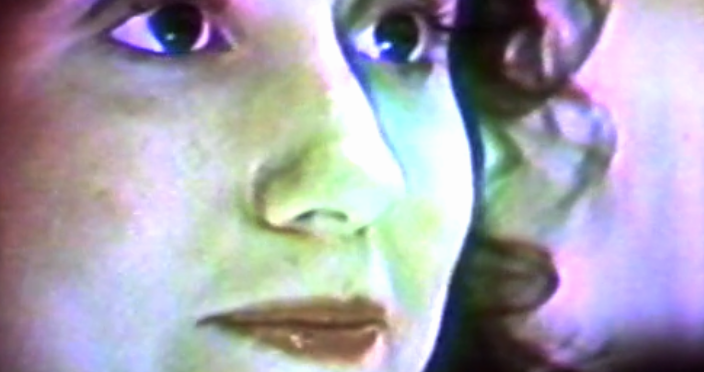
No-budget enthusiasts Frowzy Films present the video work of artist Cecelia Condit, which offers up feminist fairy tales that portray the dark side of female subjectivity, swinging between the innocent and the grotesque. The programme features the cult favourite Possibly in Michigan, her 1983 shopping-mall cannibal operetta about an unlikely trio obsessed with violence and perfume, lately reborn on TikTok, alongside the 2019 title film, which charts the trauma of her friend Diane Messinger’s abortion.
On the 17th, the Imamura season at the ICA reaches one of its highlights: Karayuki-san: The Making of a Prostitute, on 16mm, his portrait of one of the women shipped across Asia as “Japanese products”. It’s followed by Kazuo Hara’s The Emperor’s Naked Army Marches On, the gonzo doc Imamura initiated, in which WW2 veteran Kenzo Okuzaki drives around Japan in a van confronting his old comrades over their war crimes. For Don DeLillo’s 90th, The Garden Cinema has one of the better adaptations of his work, David Cronenberg’s Cosmopolis. Ben Rivers, whose Mare’s Nest adapts DeLillo’s The Word for Snow, joins Gareth Evans in conversation afterwards. South of the river, I’ll Say She Is! has Jerry Lewis’ The Nutty Professor at The Cinema Museum, with his son Chris introducing and staying behind for a Q&A on his father’s work.
On the 19th, the London Palestine Film Festival remembers Mohammad Bakri, who died last December, with a tribute at the Rio: his Jenin, Jenin and Since You Left, plus the short Le Monde, followed by a Q&A with his son, the actor Saleh Bakri. At the ICA, Lost, Banned, Reclaimed gets underway with Mohammad Reza Aslani’s Chess of the Wind, a 1976 chamber piece of heirs circling a matriarch’s mansion, banned and presumed lost until its negative turned up in a Tehran junk shop. Ghost Light’s Horror for a Cause screens Fred Dekker’s Night of the Creeps, a 1986 frat-house creature feature of alien slugs and campus zombies, raising funds for The Cinema Museum’s campaign to buy its home.
On the 22nd, BFI Southbank premieres a new restoration of Jaromil Jireš’ Valerie and Her Week of Wonders, fresh from Venice: a 1970 Czech New Wave fairy tale of a thirteen-year-old’s first period, crowded with vampires and lecherous priests. Writer Virginie Sélavy introduces. The Lexi’s Lynne Ramsay spotlight reaches We Need to Talk About Kevin, with cinematographer Seamus McGarvey in conversation afterwards. While the Barbican’s Jazz on Screen strand has Louis Malle’s Ascenseur pour l’échafaud, a 1958 debut noir undone by a stalled lift, with Jeanne Moreau walking the Champs-Élysées all night to the trumpet Miles Davis improvised in a single session.
On the 24th, Lost Futures returns after a lengthy hiatus with David Blair’s Wax, Or the Discovery of Television Among the Bees, a 1991 video oddity in which a beekeeping computer programmer has a “television” implanted in his brain by telekinetic bees. In May 1993 it became the first film ever streamed online, at two frames a second. The ICA screens it from a VHS made for the occasion, a nod to the homemade tapes Blair first distributed it on. In Dalston, the Rio has Krzysztof Kieślowski’s A Short Film About Love, stretched from the sixth Decalogue into a feature, in which a teenage post-office clerk trains his telescope on the woman across the courtyard. Over at the Barbican, I Am Furious Black turns to Greaves’ late-career portraits of Black American history: Booker T. Washington: The Life and the Legacy is paired with Ida B. Wells: A Passion for Justice, in which Toni Morrison reads from the crusading journalist’s anti-lynching reports.
On the 25th, the London Palestine Film Festival takes over the ICA for a double bill from Godard’s most militant years. Godard in America trails him and his Dziga Vertov buddy Jean-Pierre Gorin round the US campus circuit, raising money for Until Victory, a film about the fedayeen they’d never finish. What became of it, Here and Elsewhere (Ici et ailleurs), plays first. Claire Nicolas, Abla Kandalaft and Jamal Awar close the evening with a panel. Following an opening event at The Garden Cinema, John Berger at 100 decamps to the writer’s native Hackney, where Matthew Harle and Gareth Evans pore over Go Closer at Newington Green Meeting House, a cut of Berger’s long-buried early television work, ahead of a rare outing for Germinal, his 1973 Zola relocated to the Derbyshire coalfields.
On the 28th, at the ICA, Sonic Cinema projects three films by the Japanese-born, Montreal-based Daïchi Saïto from his own 35mm prints, with the artist joining curator Oliver Dickens for a Q&A. Later, in the same room, the Fashion in Film Festival turns 20 with John Maybury in the 1980s, with Maybury in conversation afterwards. Over at Close-Up, Exit Strategies offers a programme of six shorts ranging from Jennifer Levonian’s scented-candle pyrokinesis in Cinnamon, Thunderstorm to the half-hour small-town wander of Jason’s Story for the London International Animation Festival. Over in London Fields, Folks presents Short Films About Big Cities 2 at Finch Community Cinema, a programme of docs on big city life anchored by Agnès Varda’s Daguerréotypes, her portrait of the shopkeepers of her own Paris street, shot no further from her front door than her electrical cable would reach.
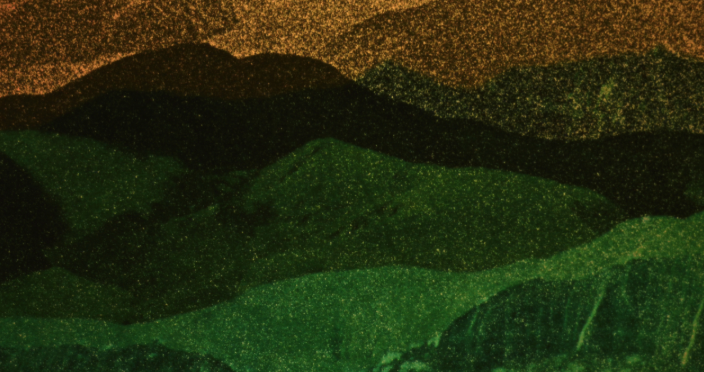
A programme of three hand-processed films by Japanese-born, Montreal-based Daïchi Saïto, projected from his own 35mm prints: earthearthearth, shot on 16mm in the Andes with a score driven by saxophonist Jason Sharp’s own breathing and heartbeat; Trees of Syntax, Leaves of Axis, centred on a maple stump in Mount Royal Park; and Engram of Returning, reworked from found footage evoking his early years between Japan and Canada. Saïto joins series curator Oliver Dickens afterwards.
On the 29th, The Nickel has Henri-Georges Clouzot’s Diabolique on 16mm, the 1955 thriller in which a headmaster’s wife and mistress drown him in the bath, only for the body to go missing. BFI Southbank’s Corman centenary reaches the director’s swan song, Roger Corman’s Frankenstein Unbound, his first film behind the camera in almost twenty years. Over at the ICA, season The Sublime Encounter screens Satyajit Ray’s Devi, starring Sharmila Tagore as a young bride whose father-in-law dreams she’s the goddess incarnate.
White Cube
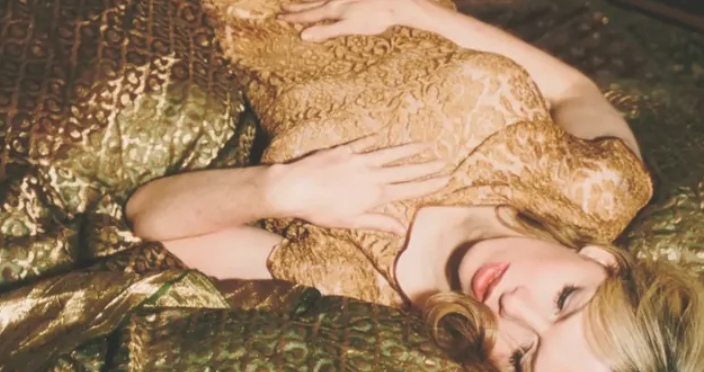
From the 24th, the Hayward Gallery hosts You Never Did Anything Wrong, Nan Goldin’s first institutional show in the UK since 2002, featuring four recent film works, amongst them a two-part work scored by Mica Levi.
Until 6 December, Chisenhale Gallery hosts Kibuuka Omumbaale, the first UK show from Wakaliga Uganda, the Kampala collective behind Wakaliwood and Who Killed Captain Alex?, the shoestring action film that became a YouTube cult. Their new commission is a superhero video in which a teenager on a school trip to the Uganda Museum comes away with the powers of Kibuuka, the Buganda war god whose remains Cambridge returned in 1962, one of the earliest acts of restitution in British history.
From the 17th until 13 December, Whitechapel Gallery once again hosts the Film London Jarman Award. This year’s nominees are Alia Syed, whose The Dhaba records testimonies from two men who reached Glasgow from the subcontinent decades apart, set against the city’s statue of Lord Roberts; Ilona Sager, whose Other Actors explores the past and present of Alvar Aalto’s Paimio Sanatorium; Rhea Storr, who follows Mama Dread’s, a Leeds West Indian Carnival troupe, in A Protest, a Celebration, a Mixed Message; and Sadia Pineda Hameed, director of Anak Where Did We Stay? which mixes a Plymouth home-movie archive with her family’s own, staged as a conversation with her mother over the footage.
From the 24th, until March 14th, the Hayward Gallery gives Nan Goldin her first UK institutional show since 2002, You Never Did Anything Wrong, built around four recent films. Memory Lost, dedicated to her anti-opioid group P.A.I.N., goes back to the years of addiction, while Stendhal Syndrome, in its UK premiere, finds friends and lovers echoed in classical art. The two-part title work, scored by Mica Levi and with its second half shown for the first time, turns the camera from people to animals and land, beginning with an eclipse and the old myth of animals stealing the sun.
Forum

On the 12th, Bernadette Buckley, Vivienne Jabri and Abiba Coulibaly convene for Wakaliga Uganda and the image of violence, a panel at Chisenhale Gallery on the superhero as a figure made by war.
On the 12th, at BFI Southbank, Julie Corman, producer of more than 35 films and Roger’s widow and long-time partner at New World Pictures, gives an illustrated conversation on the career of the man who made drive-in quickies into a training ground for Scorsese, Demme and half of New Hollywood, alongside her own memories of the shoestring empire they built together.
Also on the 12th, Chisenhale Gallery closes its Wakaliga Uganda symposium with the third of three panels around Kibuuka Omumbaale, the newly commissioned film by the Kampala collective better known as Wakaliwood. Wakaliga Uganda and the Image of Violence takes the superhero as a figure made by war, and asks how comedy and popular culture help people process violence lived through by one generation and handed to the next. Durham historian Dr Anna Adima chairs Goldsmiths’ Bernadette Buckley, whose forthcoming book on Wakaliwood is titled Mud, Blood and Wooden Guns; King’s professor of international politics Vivienne Jabri; and Abiba Coulibaly, founder of Brixton Community Cinema and Atlas Cinema.
Every Monday this month, the University of East Anglia marks fifty years of film studies in Norwich by taking over the BFI Reuben Library with UEA Film50, a run of evening talks on what one of Britain’s pioneering film departments did to the way we watch. On the 9th Melanie Williams revisits Ealing Studios, the subject of Charles Barr’s landmark study. On the 16th, Ginette Vincendeau and guests trace the feminist film scholarship that came out of Norwich, which began with the 1978 event that grew into the Norwich Women’s Film Weekend. The month closes on two national institutions, Doctor Who and James Bond.
Until next time