

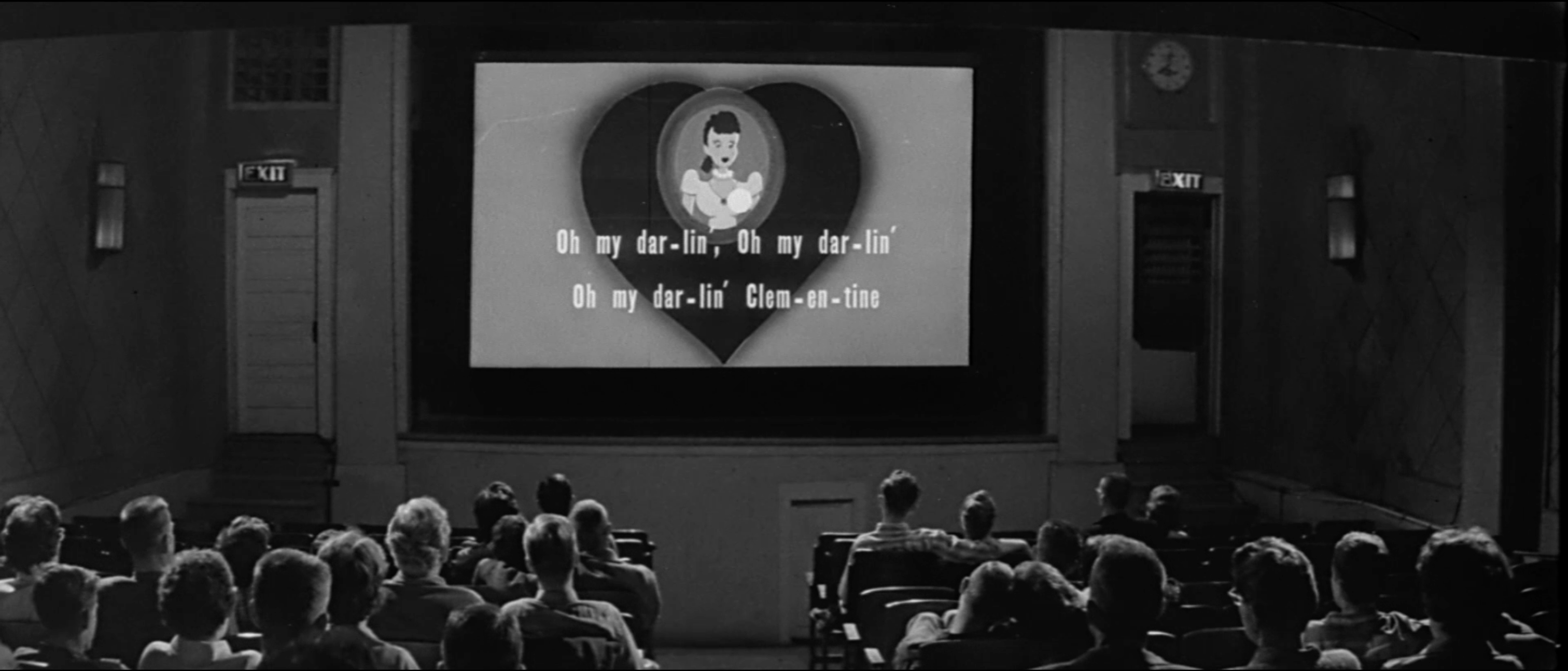
After a long winter and fickle spring, the BFI’s Film on Film Festival arrives with the sense that summer, finally, is here to stay. In London temperatures creep north of 25 degrees, with a stormy mugginess hanging over the city. Next door the Southbank Centre’s Meltdown festival fills the brutalist fortresses’ concourses and food markets with bodies; the roads around Waterloo bustle with caravans of women in cowboy hats on their way to Beyonce’s residency at Tottenham Hotspur Stadium, while Trooping the Colour temporarily fills the skies with military hardware, sending out of town tourists scrabbling for their cameras.
In just its second edition, Film on Film is already an essential date on London’s festival circuit, showcasing thirty-eight features, thirty-six shorts and the pilot of Twin Peaks on an array of gauges ranging from 8mm through to 70mm. Carrying the imprimatur of the BFI, the festival, like LFF and Flare, is crowd-pleasing enough to capture an audience beyond the Southbank regulars, but inside-baseball and strange enough to concentrate most of those usual suspects, briefly, in one venue. For one summer weekend the corridors of the BFI are home to an uneasy economy: the place to be both for Disney Adults who want to see the Star Wars where Han shoots first, and the bagmen seeking out a Wellman western on a pristine 35mm print. Two disparate groups, but temporarily allied in the belief that there’s no better place to usher in summer than in a dark, crowded theatre.
In that dark, a double-bill of generational warfare gets my festival underway on Friday, opening with Hud. Ritt’s revisionist western is, if nothing else, a first ballot entry for the We Used To Make Things In This Country Hall of Fame, presenting Paul Newman — a charming bastard as Christina Newland puts it in her introduction — in CinemaScope on what would have been his centenary. Like its star, the film is handsome and solidly built, a rugged, panoramic sketch of the Texas flatlands framed in low horizons. Lensed by James Wong Howe, the film is keenly attuned to the sensuality of bodies and the gravity of space in a way few contemporary films are, deeply evocative of the heat and decay of a landscape that’s seen better days. Its plot strikes a likewise elegiac tone, chronicling a story of familial bad blood that stands in for a wider seachange: the passing of Texas from a land of horses and cowboys, centered around an economy based on generational cattle ranching — John Wayne country — to one based on the extraction of oil, with all the attendant financialisation and disappearing-into-air. An impersonality that Newman’s character, the bastard, is eager to embrace, animated by a mixture of Oedipal struggle and his own naked avarice. In his own performance and star power, he approximates the same decay of values, family and tradition, if not in his hunky jean-jacketed sensuality, but his loose morality and labile, pretty-boy charisma.
What follows is The Student Prince in Old Heidelberg, which pulls in one of the largest audiences of the weekend to NFT1 despite “merely” being a silent film, much to the delight of film historian Kevin Brownlow, who introduces. Lubitsch is of course a different proposition to most silent film directors in rep circles, and the scant availability of the film, at least beyond muzzy, VHS quality rips from certain corners of the internet, brings out not only those hoping to see it on a good print, but those who want to see it at all. The film is lighter, more cautionary and fabulist than Ritt’s sweaty, amoral western, telling the story of a love that cannot be between a crown prince and a peasant, essaying a young man’s liberalism and humanism frustrated and then crushed by the traditions of previous generations that weigh down on him. That the young man is trapped in a very gilded cage, the first in line to a fictional, though vaguely Prussian kingdom — as Kevin Brownlow details the film was part of a push by studios to woo back Central European markets after the war — is a minor roadblock for Lubitsch in eliciting sympathy for the scamp, who is naive and boyish in all the ways Newman’s Hud is not. In this film, tradition wins at the expense of the young; and a trademark turn of Lubitschian irony, here darkly employed, turns a line repeated throughout the film into a bruising punchline. Have pity on the monarchy.
Away from the screen, conversation over drinks or during cigarette breaks between films is dominated by MUBI’s recent dealings with Sequoia Capital, a venture capital firm linked to the IDF. As reported in the Financial Times and amplified by the instagram page filmworkers4palestine, the venture capital firm invested $100m in the streamer in May; an investment that was preceded by funding for several Israeli companies in February 2004, the most notable being that of defence technology start-up, Kela. Founded in July 2024, Kela boasts of providing “battle-tested tech for modern warfare,” offering a product that serves as an operating system that enables militaries to “integrate artificial intelligence and commercial technology” — the battle-tested boast coming from its use in the field, that is to say occupied Palestine, by “Israeli innovators”. A fixture at European festivals and the most modish repertory screenings for the better part of a decade, the streamer’s Klein blue tote bags are conspicuously absent from the shoulders of self-elected cinephiles over the weekend, perhaps auguring a sea change in the platform’s fortunes, or just that it’s a Trader Joe’s Tote Bag Summer
Saturday is Nitrate day. During our onboarding for each screening, we’re informed the BFI is the only organisation equipped with the necessary provision and labour specialisation to handle and screen the material in the UK. The luminosity and mercurial quality of the prints is far superior to the ‘safety’ prints that replaced them in the 50s, we’re told, coming at the expense of an extreme combustibility, a quality self-reflexively explored in films from Hitchcock’s Sabotage to Inglorious Basterds, and one that led to the establishment of both film censorship bodies and archives such as the BFI itself. The bad boy of the film rep circuit, the screenings do good business with films that would struggle to fill NFT2 on a weeknight, reflecting the still-growing draw of the non-digital in the rep screen economy, a site-specific boon only rivalled by duration in the curator’s toolkit — both qualities something the ICA’s Rivette season recently made the most out of. Our onboarding closes as all do, with a warning of what to do in case of a fire. Passengers are shown the nearest fire-exits, and advised to stay calm in the event of an emergency.
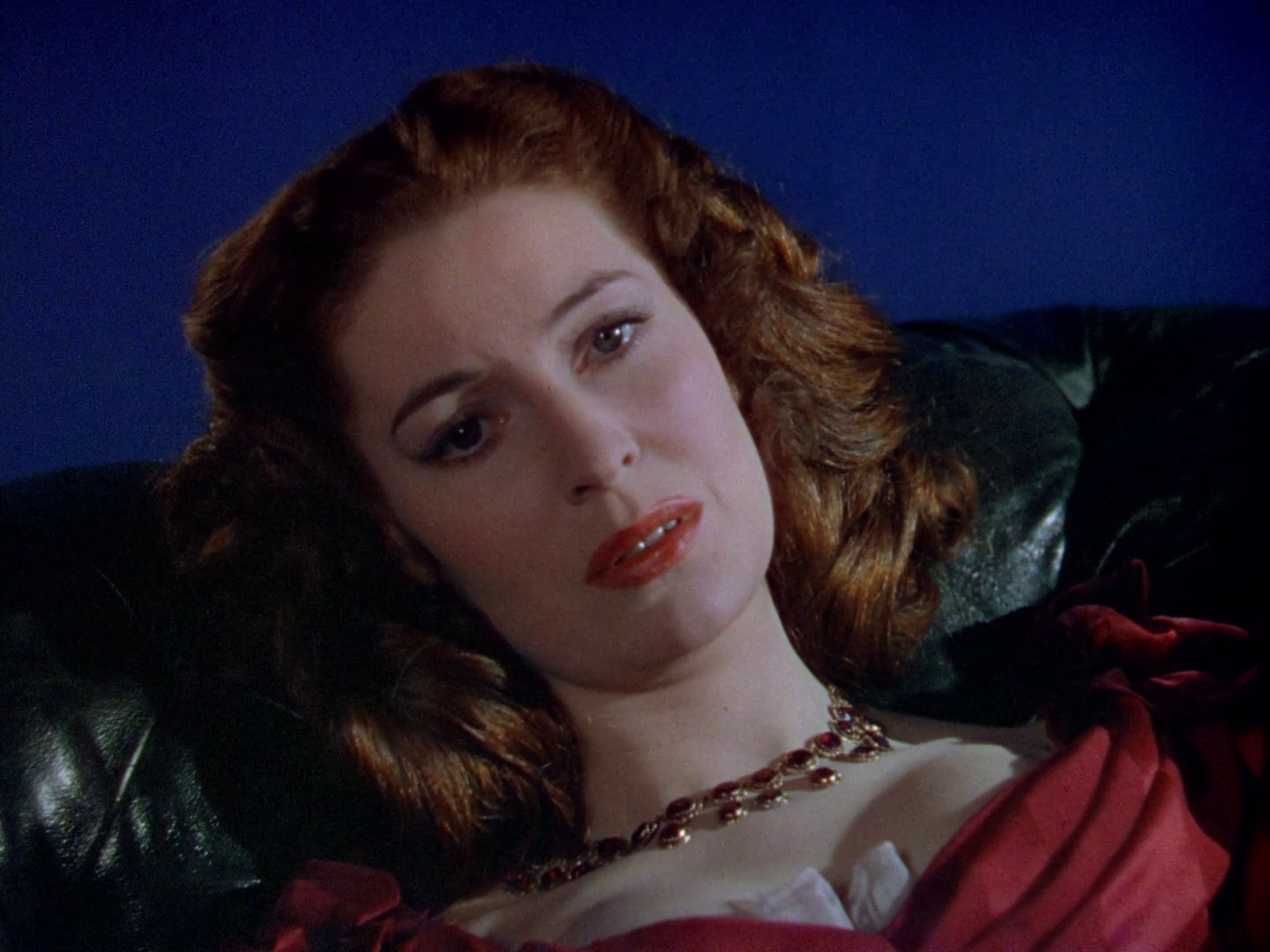
Sandwiched between a release print of Un Chien Andalou and an edition of Hitchcock’s The Man Who Knew Too Much (1934) that may — or may not, as archivist Sonia Genaitay repeatedly stipulates with academic caution — have passed through Nazi Germany, it’s Marc Allégret’s Blanche Fury that impresses most. The film is a crowd-pleaser, elevated by the attention lavished on it in NFT1 by festival crowd, something it wouldn’t find in NFT2 on a weeknight. The film is a pulpy, pop-historical tale with a gothic undertow, telling the story of Blanche, a beautiful, young and orphaned governess who, on one particularly drab workday, is called to work at her estranged uncle’s country estate. There she becomes embroiled in an ancient family feud. On the one side, the dark arrogant Philip Thorn, the illegitimate son of the estate’s ancestral owner — another charming bastard, relegated to working downstairs — and on the other the Furys who have inherited the house and family name from Philip’s widowed mother. From this side, Blanche marries the nebbish Laurence, but soon finds the arrangement unsatisfactory and starts an affair with Philip, who has aspirations on reclaiming his title. Plotting ensues, there are gypsies, and a legend involving a loyal barbary ape that we are warned to be wary of. Though I am medium agnostic, the film’s flames and frippery do look particularly handsome in nitrate. The day’s screenings, unlike other recent days at the BFI, pass without event.
The next morning MUBI release a statement on Instagram, addressing their relationship with Sequoia Capital. The post only has the effect of fanning the flames of what had up until that point been a slow rumble of dissatisfaction. The streamer is widely renounced. Most forcefully, the destruction of Palestinian cinemas by the Israeli occupation is offered as a rebuke to the streamer’s vague C-suite defence of taking the money as a way to “accelerate” their “mission” of delivering films to global audiences. A boycott is suggested; other “more ethical” streaming platforms are shared. Strident voices puckishly advocate for a return to a piracy — does anyone have a Karagara invite? The Twitter accounts offering direct downloads of director’s filmographies that have thrived in the platform’s retreat from any meaningful content moderation provide links to works on the streamer’s slate. Twin Peaks is particularly targeted, set to premiere on the streamer in a well-advertised and branded push to introduce the property to a new generation, doing for zoomers what Universal’s Definitive Gold edition DVD box set did for millennials nearly two(!) decades ago. Calmer voices point out the platform the streamer has provided to its editorial team, and the broad complicity of the arts and media with firms like Sequoia. Those with a VPN and a Criterion Channel account crow, regardless.
Back in front of the screen, Kubrick’s The Killing brings the house down in a packed NFT1, screening from a personal, high-contrast contact print from the director’s own personal collection. Adapted from Lionel White’s Clean Break, its plot, centered around the planning and execution of a heist at a race-course, is manned by a rogue’s gallery of opportunists, crooked cops and Sterling Hayden’s somewhat-professional Johnny Clay, the steely center spoke around which the film spins in its multiplicity of perspectives. With its toying with chronology and its episodic frame, the film feels fresher and younger than its years, no doubt in part helped by its being picked over by lesser directors over the years, and its relative anonymity as an early work shielding it from the Kubrick Heritage Industry.
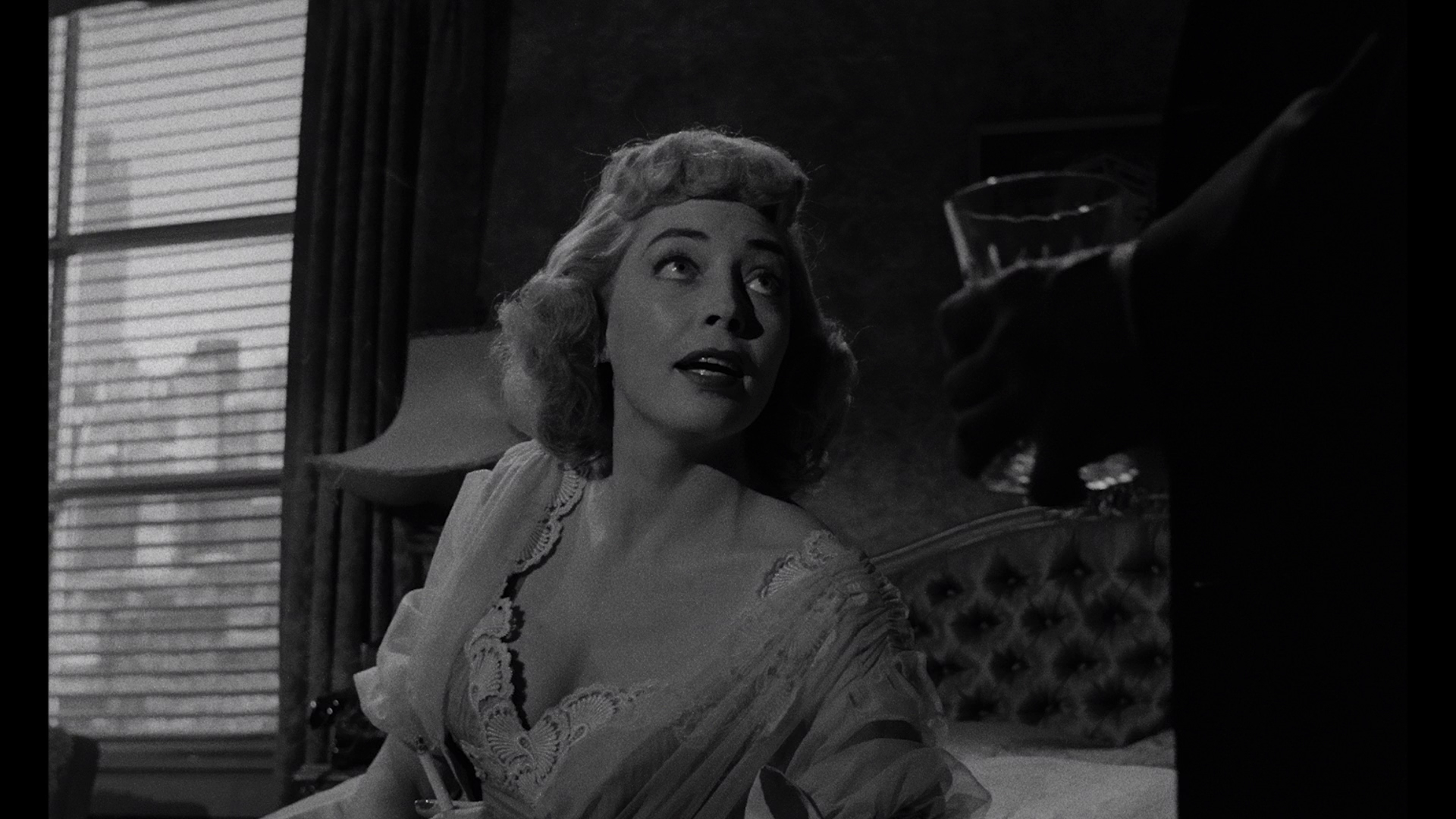
What the film also brings out are Kubrick’s sometimes underappreciated chops as a purely comic director. In front of a packed NFT1, the cruel ironies that he submits his puppets to elicit big laughs, especially when undermined by the film’s detached narrator — a foretaste of his masterpiece, Barry Lyndon. But it’s also a film where the fizz of the performances elevate the script. Here Hayden and Maria Windsor stand out. Hayden delivers his usual flinty, hard-boiled affect, with that all-American baritone, but as he would showcase later in Dr. Strangelove, he also has the gift to offer a slightly loony modulation to this quality, self-parodying that rat-a-tat wise-guy rhythm, as when he diverts a telegrammatic, well-rehearsed description of one part of the heist — involving the shooting of a race-horse — into a legal-philosophical digression, delivered to a puppy-cradling Timothy Carey, as to what exact felony is committed by such an act. For her turn, Maria Windsor offers one of the great performances of a cuckoldress. We’re introduced to her sprawled across the bed, still in her negligee, fielding her harried, just-back-from-work husband’s questions with a studied indifference, face in her magazine. Crumpled by a moral and physical weight, he furtively asks his darling wife if there’s anything for dinner. “Well of course there is,” she replies, lighting a cigarette. “There’s all sorts of things.” Like what? “Well… there’s steak and asparagus and potatoes.” Her husband replies he doesn’t smell anything, before she notes that’s because he’s too far away from it. Too far away? “Certainly. You don’t think I had it cooked do you? It’s all down the shopping centre.”
As well as advertisements for cinema-going in general, festivals such as Film on Film are also prefigurations of what is missing in a scene in the day-to-day. At a blue-chip festival such as LFF, the absence is one that’s hard-coded (just about) into the regional release patterns of major and independent studios and their press-cycle schema. It would be nice to have the best and biggest narrative film releases all of the time, as soon as possible, seen amongst the most enthusiastic audiences and in the best screens in the capital, but such a wish is equivalent to wishing it was Christmas every day. Leaving something like Film on Film for the day, the wish is for something a little smaller, sadder for its not being true. In the headline branding of the festival is a quiet recognition that for the BFI’s considerable archives and institutional heft, the Southbank too rarely shows film, often out-punched in this regard by the Prince Charles Cinema across the river. Away from matters of medium, in the festival’s programming outside from NFT1, with its focus on documentary, shorts, and other non-narrative forms, is a reminder that London sorely lacks a venue akin to Berlin’s Arsenal and Sinema Transtopia, or New York’s Anthology Film Archive that could host this kind of work all year around.
The relative lack of depth and breadth in London’s film culture, especially when compared to the two outstanding centres of non-Hollywood cinema — and artistic production more broadly — over the past century, isn’t necessarily a failure of the city, but there remains the sense that London could do better with what it has. The presence of experimental shorts like those seen in programmes like Ghosts of Transgression, or historical or non-conventional documentary practice such as that in the festival’s exploration of the Newsreel Collective, shouldn’t be limited to festivals like this or Open City. Institutions like the ICA and the heroic efforts of the hard-squabble semi-squatters at the soon-to-be-lost Atlas Cinema do more than their part, but the burden should be more equitably shared. As these venues and festivals prove: the audience is there.
That audience is in part founded by streamers like MUBI. The relatively sudden uptick in repertory cinema audiences amongst young-millenials and zoomers is multi-casual, but it’s hard to imagine many that don’t run through or acknowledge the proliferation of streaming services over the past decade and the new velocity of image consumption represented by Instagram and Tik Tok. The relationship between a festival like Film on Film and MUBI (or something like it) is symbiotic: the steamer is good enough to inculcate a passion, a practice of viewing privileged above the TikTok-Netflix scroll — or the Netflix-Disney DeathMachine as London’s newest rep cinema puts it — but not so good — not Spotify — as to strangle “real” cinema culture as music streamers have transmogrified the music economy. Here festivals like Film on Film, or a membership with the BFI, ICA or The Prince Charles fill the gaps of these streamer’s patchy, small, and ever-shifting libraries, offering an even more privileged way of looking for those in geographical proximity, a reassertion of a scene against the internet’s flattening of space. As the cooler, more empirical heads in the MUBI brouhaha have pointed out, the implication of independent arts scenes with venture capital extends far beyond Sequoia Capital and MUBI. It’s also the case that it extends beyond the bottom lines of the streaming and brick-and-mortar cinema industries in general, reaching deep into the very economies of taste — the MUBI tote in your head — that these industries capitalise on and service.
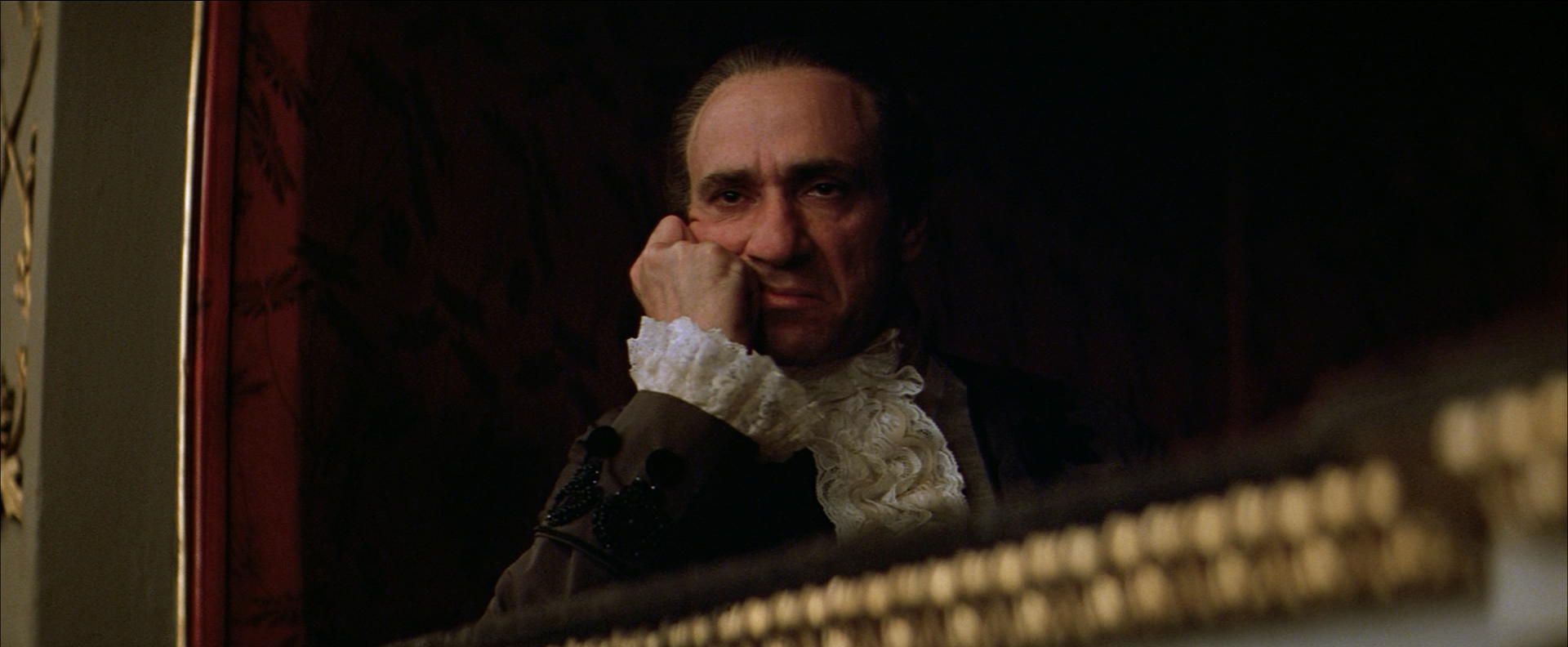
My festival closes with Milos Forman’s Amadeus on 70mm. A film that sets out to pervert the trope of the serious, misanthropic genius who lives for nothing but his own art and posterity, by instead placing that type in the character of the lesser rival, Salieri, who, in a cruel twist, is only talented enough to appreciate Mozart’s genius and how mediocre he is. The film eventually vacillates towards that typical biopic type at its end, where we find Mozart, jaundiced and spluttering on his deathbed, reciting his Requiem to that same rival. But not before Schaffer and Forman’s rendition of the man takes the real-historic Mozart’s fondness for the scatological, turning him into a Looney Tunes character who drives his rival, who has done everything right and must suffer for it, into a deep crisis of faith on seeing the vessel that God has decided to anoint with his talent.
Appropriately for a repertory festival, the film is also a comedy of taste, portraying the money and power that undergirds an aesthetic realm that is far from divinely ordained. In one of the film’s opening scenes, Salieri, anonymous only to the historian and afficinado, has the demise of his own contemporary fame confirmed to him in the face of the Catholic priest sent to hear his confession. Mozart enjoys a celebrity, but for all Salieri’s jealousies, dies penniless — unceremoniously dumped into a pauper’s grave on a chilly winter morning. Known intimately to us now, in the contemporary his apparent genius is no match for the Hapsburg court’s Italian contingent: a chorus of bespectacled pseuds who wield the weight of history and tradition indiscriminately against someone who doesn’t share their nationality, sense of decorum or language. The only concrete criticism they’re able to offer of his work is the accusation that it has “too many notes.” On the throne but not in power in an aesthetic sense, the dim Joseph II can only agree.
Like any film, Amadeus is also a document of its own making, and the tastes that shaped both its production and reception — an arrangement that could anoint a film like this with a box-office of just under $100m. The film is adjacent to awards-bait, but oftentimes stranger, funnier and more irreverent than it has any need to be — avoiding enough period and biopic beats to be interesting, while still hitting the right amount to win all of the Oscars it went on to win. Like Ritt’s Hud, the film is a portal back to a different time on the cusp of profound change. In it, we travel back not only to 18th century Vienna, but a period when major studios existed who could afford to make Oscar-winning fare that was strange enough to furnish Mozart with a Daffy Duck laugh, even while making making Indiana Jones and Star Wars movies. It’s a situation that threatens to creep back with the successes of films like Sinners in the box office and with directors like Sean Baker winning Oscars, but perhaps only because the major studios are so much less major, and the box office so much smaller. Walking back to the station in the sunshine, skirting past autograph hunters waiting for Kyle MacLachlan and the bagmen heading to the IMAX for 2001, it’s nice to imagine otherwise.