

by Joseph Richards
The film work of Andy Warhol embodies an adage often levelled against avant-garde art — that it’s harder to appreciate than it was to make. Outside a cinematic canon suspicious of the gallery and uneasy with humour, works such as Sleep (1963) can only invite a nod of passing familiarity, vague recognition of a lineage passed down to more parsable, less winking forms. For the contrarian, the length, slowness and singularity is a barrier: someone looking for a novel addition to their Letterboxd Top Four or dinner party conversation can find names more obscure with works boasting shorter runtimes. Films that don’t encourage what fellow traveller Malcolm Le Grice somewhat euphemistically called “a breakdown of involvement”. A state that might sound to that notional dinner party guest like appreciating the notes that aren’t being played — something they could just as well do at home.
Running this past June, the BFI’s Wanda and Beyond: The World of Barbara Loden uses the brevity of Loden’s career to sidestep the usual soggy quality of solo-artist retrospectives. Without the possibility of an exhaustive tribute, a feast for the indiscriminate bagman, the season offers creative and intellectual acclaim to her way of rendering the world. An underappreciated filmmaker is venerated but, in the same reflex, their wider preoccupations and biography are used to essay a cinema peopled by the itinerant and the wayward, the weird and the lonely.
It’s here that Chelsea Girls (1966) crops up, alongside Mouchette (1967) and Sisters of the Gion (1936). A gallery-ish portrait of the New York demimonde that would ordinarily do well to make it to the Tate Modern, Warhol’s celebrity paean wins admittance to the BFI Southbank, vouched for by an implied kinship with Bresson, Mizoguchi and Loden. It immediately sells out NFT1, bumped up from a tentative slot in NFT3. The General Admission seating, conspiring with the summer heat and the film’s length, encourages early arrivers to stake out the aisles.
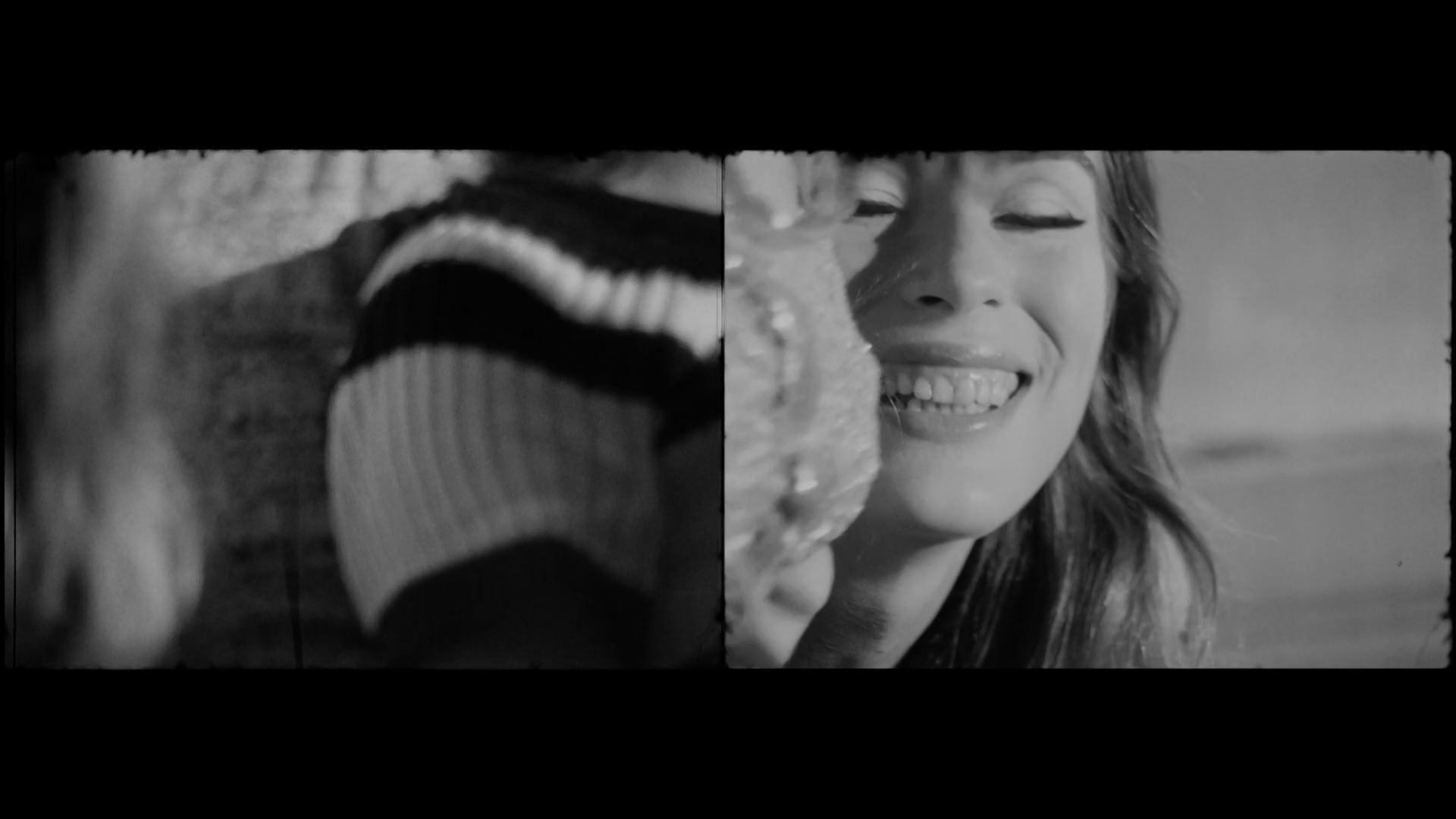
What almost immediately stands out is the amount of real estate the film commands. The film is double-projected, made up of twelve single-take reels projected in pairs. Two windows into the hotel, producing a display broader than anything but a Cinerama frame. Every reel’s start and finish is staggered. It winks at you; each side of its diptych intermittently falling into darkness while the soundtrack flits between either scene. In its early screenings Downtown, projectionists were encouraged to conduct the film in whichever arrangement they liked. Read a contemporary review from its opening weeks and months and you’ll find a description of a presentation that likely never happened again. Now the order is set in stone. A Warhol-penned set of instructions offers some standardisation, but a kernel of happenstance is inherent. With its many moving parts, a projectionist can only try their best. If everything goes to plan, the film begins with Nico cutting her bangs and ends with her bathed in strobing, lysergic colour.
It’s in those bookends that the film’s relative accessibility and normieness lies. For all its avant-garde pretension, one of its central premises is an old one. Like Warhol’s Screen Tests, there’s an attempt in its gallery of faces to capture something like silent cinema’s aura of presence, the shock of the familiar. Its plot, such as it is, consists of Warhol’s superstars performing freewheeling situations, often as themselves, sometimes to script, in self-contained one-reel scenes within the hotel, offering what feels like documentary snapshots of his clique of cool weirdos. Voyeuristic, a site for a prurient, tabloidish gaze, the film was a relative commercial success. After premiering at Jonas Mekas’ Film-Makers Cinematheque, it moved uptown, where it found a more nosey and profitable audience keen to get a taste of what was going on away from the Park. Someone named International Velvet is always going to be more interesting than the Empire State Building.
The gallery rigor remains, though. Enchanting but absent the constructed familiarity of the narrative film, your mind turns back on itself. Even in the presence of its gamine, sylphlike faces, you consider your neighbours in the audience, dinner, anything at all outside the screen. A late-arriving boho couple — a reminder that it will forever be 1966 via 2006 for a small island of Camden — snap several photos of Nico up on the screen; the usual laxer policing of such things in long screenings and the sense that they’re ‘getting’ it in means they elicit no tutting. The shuffle of the reels and their incongruence — Ondine hits someone, for real; Nico mugs blankly, the camera zooms frantically — puts time out of joint. The eye skims from left to right, abjuring the silent for sound, black-and-white for colour, in search of ease. I think about another movie: the tricolour bombast of Napoleon (1927), seen some time ago in this same cinema, possibly in the same back row seat. Gance’s triptych overwhelms completely and suddenly — the Grande Armée in the land of Oz — here the effect is deliberately attritional, hallucinatory. The boho couple, perhaps realising Edie Sedgwick isn’t going to turn up, leave somewhere during the third and fourth reels. Brigid Berlin is having her hair combed. Patrick Fleming and Ed Hood are in bed.
Between left and right, screen and audience, a third option presents itself: sleep, something prefigured by the centrality of the hotel bed as stage, the summer warmth, the film’s oneiric disjunct, and by Warhol’s own past work. After the screening, I half-trollishly suggest that taking a kip represents not that aforementioned breakdown of involvement, but a state of heightened non-spectatorship, more porous and receptive than nervously darting back and forth. Torpor and fatigue are invited. You slip out of consciousness and wake to find a glowering white face, flared nostrils, sullen mouth — Mary Woronov — beasting somebody before impersonating Hanoi Hannah. It’s your own composition, not unlike drifting off at a party — woozy, intimate and occasionally startling. Rousing to take in its colour finale, the specificity of the hotel melted away into a darkness that invites the image to spill out over its frame and into the gloom of the dozing theatre, I leave NFT1 certain it’s the most remarkable thing I’ve ever slept through half of.
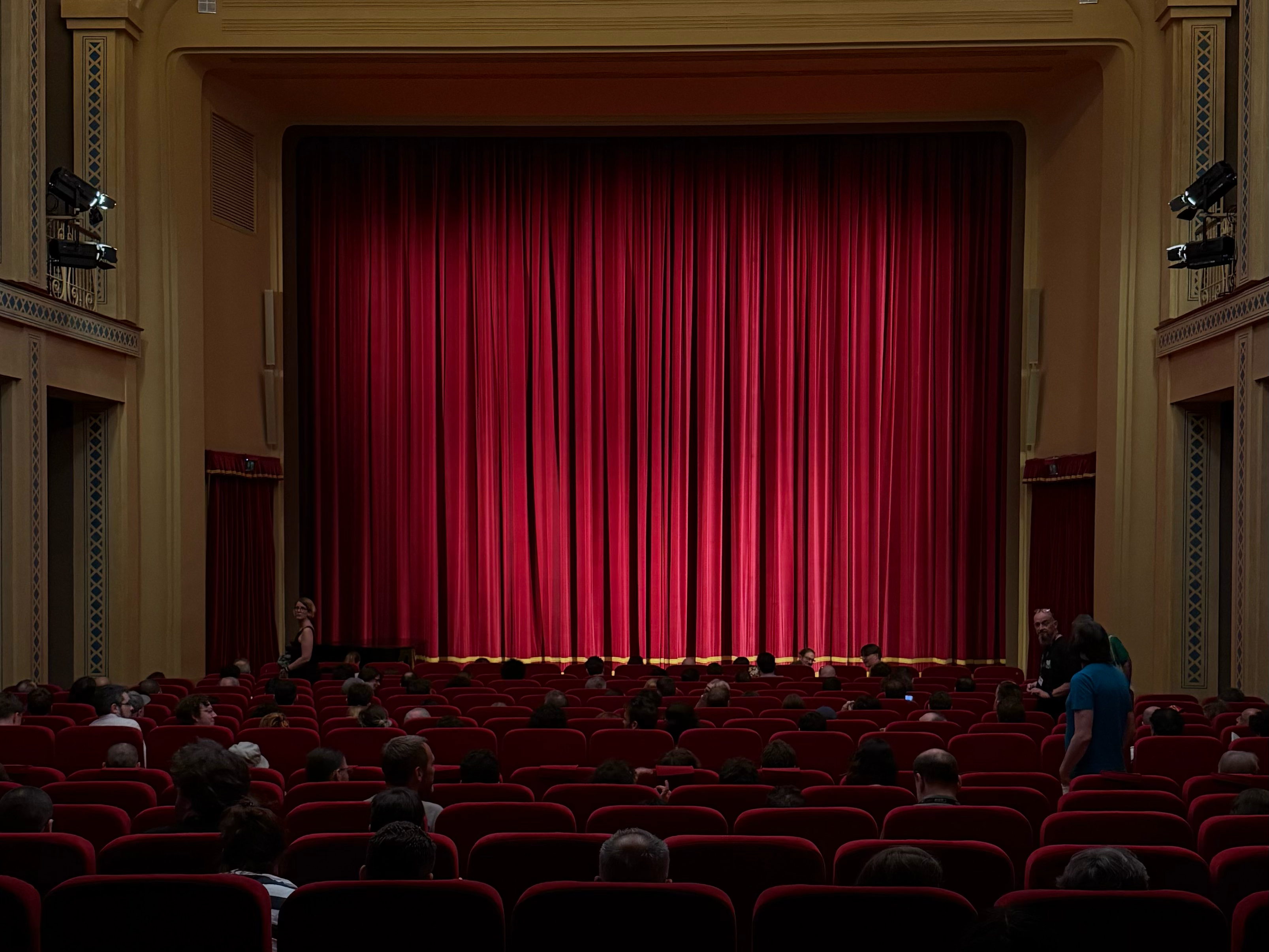
Como si dice “Sewer Socialism” in Italiano? Beyond the meat sauce, its porticos, and the university (est. 1088, making Oxford look comparatively plate glass), Bologna is also known for cinema and socialism. Pairing the two, Pasolini was born here; the exteriors for Salo (1975) were shot at the Villa Aldini up in the hills to the south. But it’s really a connection that takes form in the city through a preoccupation with conservation; the ways in which the future can be improved through attending to the past.
Il Cinema Ritrovato is the shopfront for the work of the Cineteca di Bologna and its restoration lab L’Immagine Ritrovata, institutions that, more than most, take the work of conservation and the circulation of cinematic texts seriously. At the festival 454 films screen over nine days. Entry is cheap. 140 euros affords all-you-can-eat acess to the festival’s booking system. If you’re early or persistent enough, you can see what you like. The Piazza Maggiore, the city’s gelateria-lined central square, hosts a summer-long programme of free nightly outdoor screenings that run through and beyond the festival, showing everything from Trois hommes et un couffin (1985) to The Gold Rush (1925), like everything else, the fruits of the labour of restoration institutions from Bologna and beyond. And so, for the best part of a couple of weeks at the end of June, a city roughly the size of Hackney becomes the European capital of cinephilia, repertory Glastonbury, or at least a pretty good film nerd summer camp.
The site for this festival of filmic restoration succeeds because of a more distant history of preservation. Like Red Vienna across the Alps, Bologna bears the fruits of a leftist municipal governance that sought to make cities livable for the working classes. The centro storico was largely conserved in assembly with strict guidelines for the future use of buildings backed up by more muscular expropriation of land for public housing; landlords were afforded grants to restore properties in exchange for freezing rents and giving first refusal to tenants from public housing waiting lists. Established by the Italian Communist Party, this effort abjured the usual retvrn-minded principles of conservationism, using it instead as a tool to preserve social models of the built environment against the forms of speculation that have hollowed out cities across the West.
For the planners behind the model, conservation was a form of revolution, a formulation at home both in the PCI’s mayoralty and the principles of Il Cinema Ritrovato. The result of both, a conservation of the cinema, city, and culture, is, for the length of the festival at least, a pleasant assemblage where it’s not hard to bump into people you know, or at least feel you should, nursing an Aperol Spritz between screenings in surrounds more amenable than the imperial avenues and top-down Blairite Cultural Centres that London’s cinemas exist around. The lanyarded — a tote on each shoulder, and lips wrestling with a “je ne parle pas…” or “ich spreche kein” — are rarely a suffocating majority as are they are even in larger cities’ festival “hubs” like Leicester Square or Potsdamer Platz (somehow, barely an improvement on what came before it). Rents are higher now but alongside a queer and diverse student body, the working-class population endures in the heart of a medieval walled city, bringing a bustling social and cultural life to the forefront of its tightly packed streets. Through Ritrovato, La città rosa becomes an “old city for a new society,” offering old movies for a new audience.
Holidays are for what you can’t do at home, and so, navigating the heat, I find my kicks with the non-fictional and non-filmic. Documents and Documentaries, a strand curated by festival director Gian Luca Farinelli, offers insights into the world built and captured by the camera: novelties captured by novelty, benefiting from projection in the cool halls of the Cineteca — Mastroianni and Scorsese — venues a short amble from the tree-lined Pier Pasolini square and its shaded bar, without the unfortunate vinyl-backed seating and subterranean humidity found elsewhere.
There, a programme of Gaumont newsreels from 1939 essays prototypes of the news bulletin form, broadcasting a sprinkle of historically peculiar stories: the triumph of authoritarianism, Hollywood scandal, war in Europe’s eastern fringes, and sectarian violence in Palestine. More cheerily, a collection of shorts from the French National Archive features instructional agricultural films and moon-eyed, atomic-age exhibitions of the city and home of the future, promising centrally planned, walkable mixed-use urbanism and dishwashers for all.
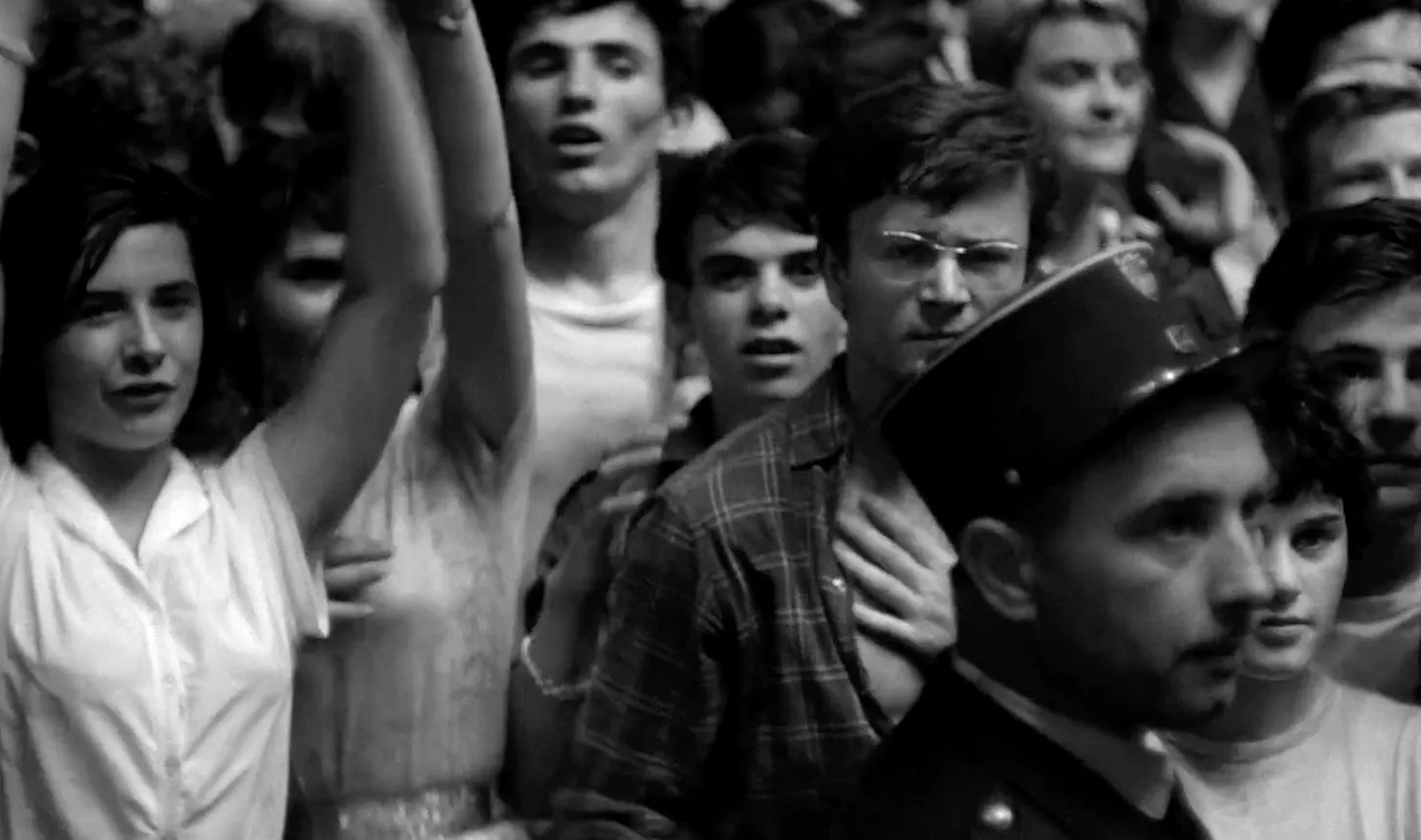
Other films in the programme are similarly rooted in the past’s vision of the future: A la mémoire du rock (1963) is a portrait of another 20th-century invention — the screaming pop fan. Direct cinema pioneer François Reichenbach captures the scrum at a Paris rock’n’roll concert inside and out. Recording for posterity the kepi’d gendarme’s baton charges against denim-clad Sartre readers, as well as quieter moments that reveal fretful glances on the faces of otherwise poised teenagers: the sweaty ecstasy before the gyrations of Johnny Hallyday, auguring a seachange in French society just as profound as anything found in the Gaumont newsreels. Le Retour (1946) performs a similar trick, recording the long homeward-bound journeys of French prisoners of war. Helmed by Henri Cartier-Bresson, the journalistic aspect is complicated by his inquisitive and humanist lens. Stentorian pronouncements of the logistics of the operation brush against a collage of portraits surveying the fear and uncertainty on the faces of men returning to a world that has moved on without them. An event of national renewal becomes complicated by the particularities of individual biography.
Away from the strictly documentary, Isaac Babel: Odessa Stories takes that contradiction of the political and the personal to a higher tenor, more fractious and mercurial. Programmed by Marianne Lewinsky, the strand renders Soviet cinematic modernism as it briefly existed a century ago, refracted through Babel’s life and writing; attention that expands and complicates the period, foregrounding the Jewish and Ukrainian contributions to its achievement.
Odessa rather than Bologna is the crucible for this coming together of cinema and communism. Throughout the strand’s screenings, the city’s immortalised, overfamiliar harbourside steps recur, offering recastings of its meaning beyond one of revolutionary rupture. In Alexis Granowsky’s Jewish Luck (1925), a comic caper following an entrepreneur tireless and clueless in equal measure, they’re the site for a romantic meet-cute. A decade later, Jean Lodz’s Odessa (1935), a productivist, sun-dappled city symphony, uses them as a stage on which a whirling troupe of naval cadets frolics down. Elsewhere in the city, there are prefigurations of the Marx Brothers and Harold Lloyd. Love’s Berries (1926) essays a dandy cad’s attempts to rid himself of his unwanted offspring — taking the shape of a dogged baby pram, all the better to rattle after him up and down every street in town — demonstrating what Lewinsky describes as a “gender burlesque,” a visual expression of a society catapulted from the feudal to modernity in a few short years. A similar undoctrinaire precocity exists in the aforementioned Jewish Luck, exemplary of the coming together of several avant-gardes — from Granowsky’s Yiddish State Theatre, radical and anti-clerical; the literary modernism of Babel himself, behind the film’s sharp intertitles; and the work of cinematographer Eduard Tissé, who in the same year would shoot that hulking monument to Marxism and montage, Battleship Potemkin (1925).
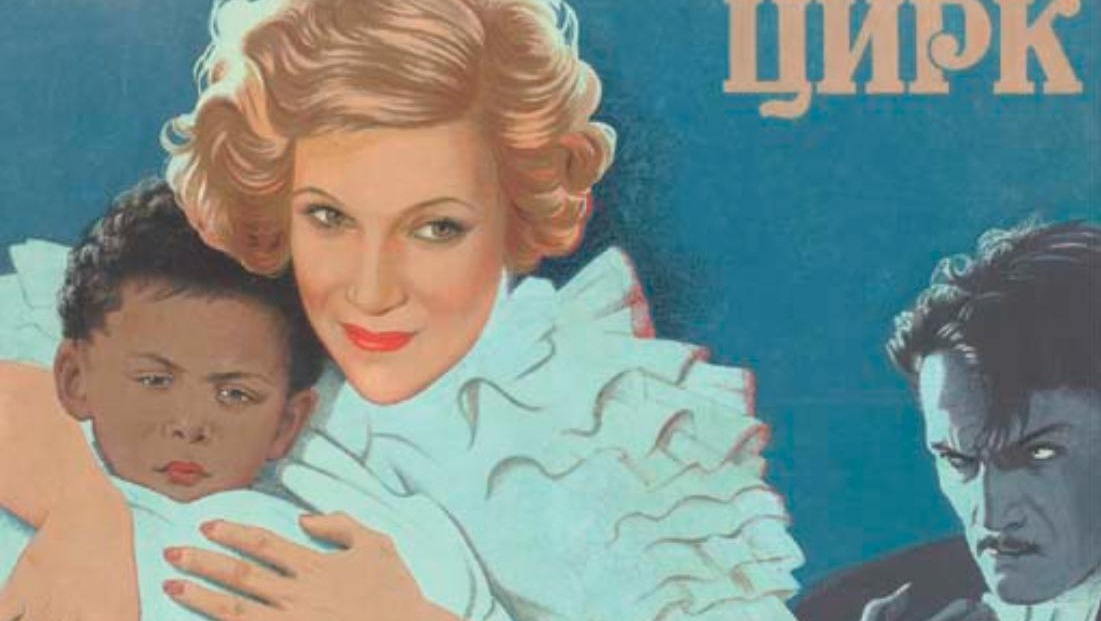
Good intentions don’t guarantee enjoyment, though; old films with bad politics often stir and delight us. A point Ritrovato can tease out better than most festivals, comparatively free from the usual festive requirements of contemporaneity, fashion and “quality” disciplining its programme. Circus (1936), a musical melodrama directed by Grigori Aleksandrov, is a film whose presence would appear to be intended as a foil in the strand. It’s exemplary of the Hollywood turn of Stalinist cinema in the ‘30s, the result of Party diktat to make films “intelligible to the millions,” — high-kicking rather than high-minded, a retreat from the formal and political radicalism of the previous decade. It also captures my imagination more than anything else on the strand.
Rewritten by Babel without credit — in the period he attempted to lay low, taking work as a script doctor — the film follows Marion Dixon (Lyubov Orlova, Stalin’s favourite actress and Aleksandrov’s wife), a trapezist from the American South who finds refuge and a fresh start in the Moscow circus when she and her mixed-race child are driven from America by a lynch mob. In the bosom of Mother Russia, still the crucible of revolution and a new society — the film implies tenuously — a will-they-won’t-they romance blossoms with Ivan, the hunky blonde performance director. An impediment to the course of true love presents itself in the form of Marion’s predatory agent, Franz von Kneishitz — a German with a suggestive moustache and another geographically annotative surname — who threatens to frame his client with the fact of her “racial crime.”
A musical — and a Stalinist one at that — it’s no great spoiler to say he fails. The narrative destination is inevitable, but it arrives egregiously enough to shock. von Kneishitz’s attempt at blackmail falls on deaf ears and he is thrown out; and in the ruckus Marion’s child is taken into the audience, cradled by a remarkably diverse coalition of citizenry and sung an internationalist lullaby in a remarkably diverse number of tongues. It is a spectacle of a future that never arrived; the child is admired as much by the camera as the crowd, framed in a series of adoring, gurgling close-ups.
Released as the Great Purge was beginning, it’s stunning propaganda: a cynical leveraging of minorities, glorifying social chauvinism under the banner of comradeship. It’s also the common stuff of Hollywood, dazzlingly utopian and deeply regressive, riven against itself. But this is 1936, Triumph of the Will had come out the year before, and Gone with the Wind would follow a few years later. The Black child is irreducible, more than a mere expression of liberty or equality, an embodiment of the ‘20s utopianism Babel helped foment, alongside the gender burlesque and prefigurations of the Marx Brothers, amongst the logics of Stalinism. Convention soon reestablishes itself, though. In one of the phantasmagoric transitions common to musicals and authoritarianism, the couple begin marching, the baby left to the crowd, leaving the circus and arriving in Red Square, shadowed by portraits of Stalin and Lenin, eyes lost in the middle distance, chins lifted by the promises of different utopias. Sometimes conservation isn’t revolution.
The baby, James Lloydovitch Patterson, the child of an African American emigrant who travelled to the USSR with Langston Hughes, died this May in Washington, D.C., having lived — with apparent satisfaction — in the Soviet Union until its dissolution. But by the end of the ‘30s Babel was arrested on false charges by the NKVD before his murder in January 1940. Solomon Mikhoels, the inheritor of Granowsky’s Jewish State Theatre, the crooner of a Yiddish lullaby at the end of the film, was assassinated in 1948 by order of Stalin.
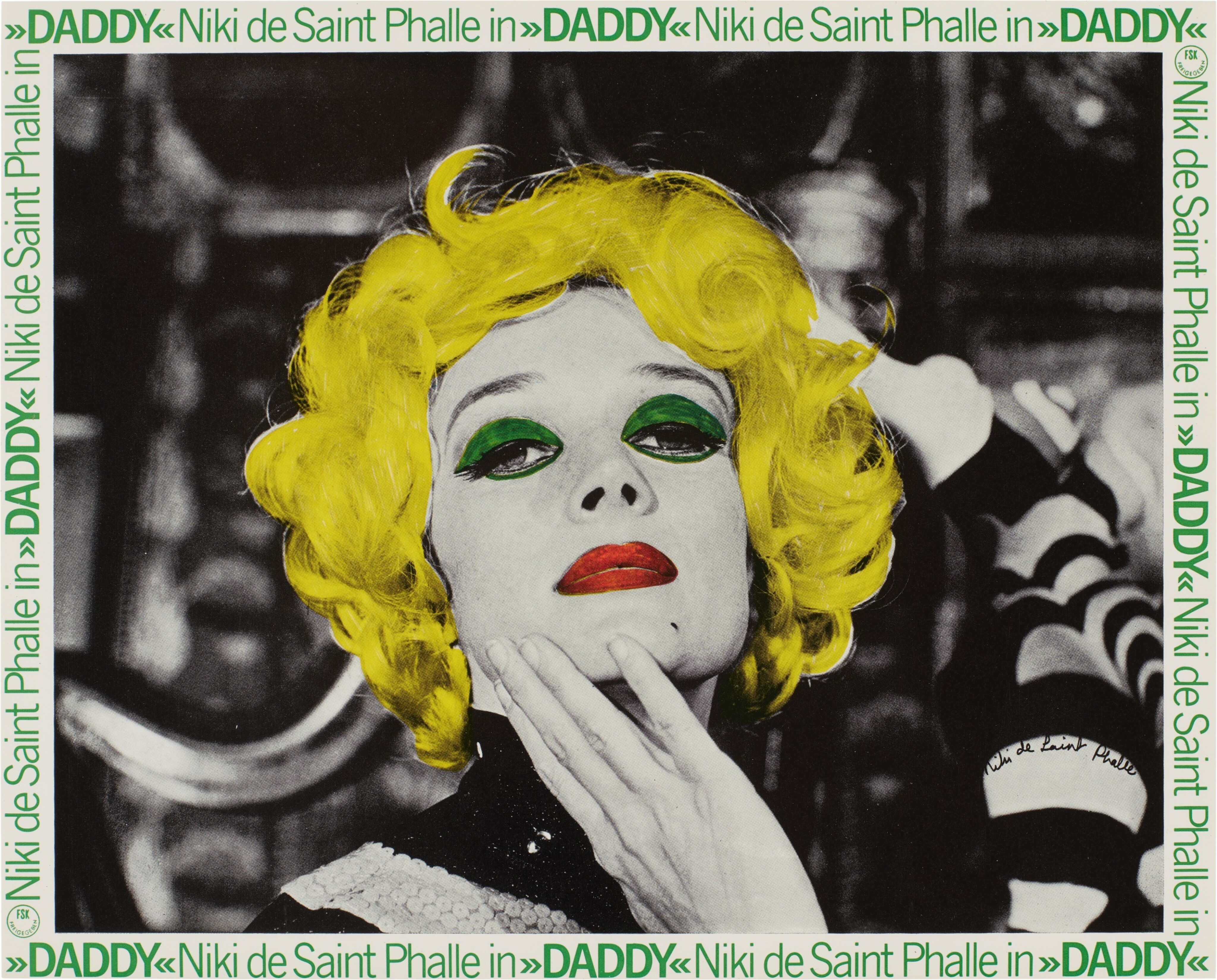
Towards the end of the festival, in an early morning scroll of the Ritrovato website, a screening announces itself: “This film is based on family archetypes that we denounce!” A manifesto declaration standing out amongst the carefully hedged academic hemming and hawing of other films’ programme notes, the rallying cry belongs to Niki de Saint Phalle, describing her and Peter Whitehead’s Daddy (1973). Screening inconspicuously in an early-evening spot in the pedagogical environs of Auditorium DAMSLab, in the printed programme it simply does not exist, perhaps owing to a late venue change or cancellation, but perhaps — I ponder with the imaginative heft of a week’s worth of day drinking behind me — because the film simply appeared. Regardless, I claim a ticket and head out, before settling down more ignorant of what the film is than usual. In a couple of hours, the film will inspire hastily convened post-film discussion circles in the Piazzetta Pier Paolo Pasolini, animated by confusion and insult.
In these conversations, attempting to get a handle on things, I start with what I feel I know for certain. The film is a trauma plot: a woman relates childhood sexual abuse at the hands of her father. But it’s already more complicated than that. Circling back to biography, de Saint Phalle is better known as a sculptor of Brobdingnagian material figures. Most famous of these is Hon — en katedral, a reclining woman audiences can enter through a passage between its legs — bodily autonomy explored through a pussy gag. At its most benign, Daddy embraces a similar blurring of authorship and autobiography, the comic and the traumatic; in the film de Saint Phalle plays the role of the daughter, both in the ostensibly post-traumatic present and — more edgily, somewhat coquettishly — in the traumatised past as the abused adolescent.
Over both performances, she offers a narration whose register hovers between diaristic-therapeutic recollection and ironised nursery-rhyme come-ons, relating severe, sometimes lurid depictions of mistreatment. Provocative enough, this Lolita-ish quality is secondary, symptomatic of the film’s central incitement of recalling abuse through the voice of a victim who, in part, still remains in the thrall of the abuser, a representation that contrasts with the elisions and buried roil that typically define the genre’s contemporary aesthetic for something much more testing and explicit.
As the film progresses, these past-tense recollections are replaced by a present-tense avenging. Later chapters depict the gaudy BDSM fantasies and other assorted tortures doled out against the now abject father figure. Reduced by age, bound in a wheelchair, kicked and beaten, humiliated in drag: the inappropriate holdings and perverted childhood games reflected through a funhouse mirror and repaid two-fold. An affect in the pedigree of Sylvia Plath and Anne Sexton giving way to something messier and more Sadeian; a patchwork of flashback and fantasy shot through a modish, counterculture Freudianism: Daddy is the church, Daddy is fascism, Daddy is marriage. Rejecting those aforementioned ellipses of the modern trauma plot, another of the film’s provocations is its insistence on literal visual presentation, a form that doesn’t just result in mere candidness, but the reproduction of hands on the body of a child actor, arguably indistinguishable from the real thing but for its intention and whatever the 70s equivalent of safeguarding was. A strategy that, more than anything else, precipitates a steady stream of walkouts.
Later in life, de Saint Phalle would detail her real abuse at the hands of her father, but a common response to the film in those post-screening chats is one of chiding. The crediting of Peter Whitehead as co-director, a rakish chronicler of the ‘60s counterculture, makes it easier to dismiss as a work of edgelord incitement. But even among those who know of de Saint Phalle, there’s a sense that the usual defence of autobiography, the inviolability of lived experience, is nullified by an excessive, equivocal nature and fictiveness — too messy, too free in its depictions of the act of abuse. I haven’t been able to stop thinking about it. In my extensive wiki-sleuthing on de Saint Phalle after my screening, I found an excretable-seeming new biopic on the artist that premiered at Cannes last year, replete with a trailer that all but features a Solsbury Hill needle drop. For all Daddy’s failings, it seems, to me, a much more violent and offensive form of representation.
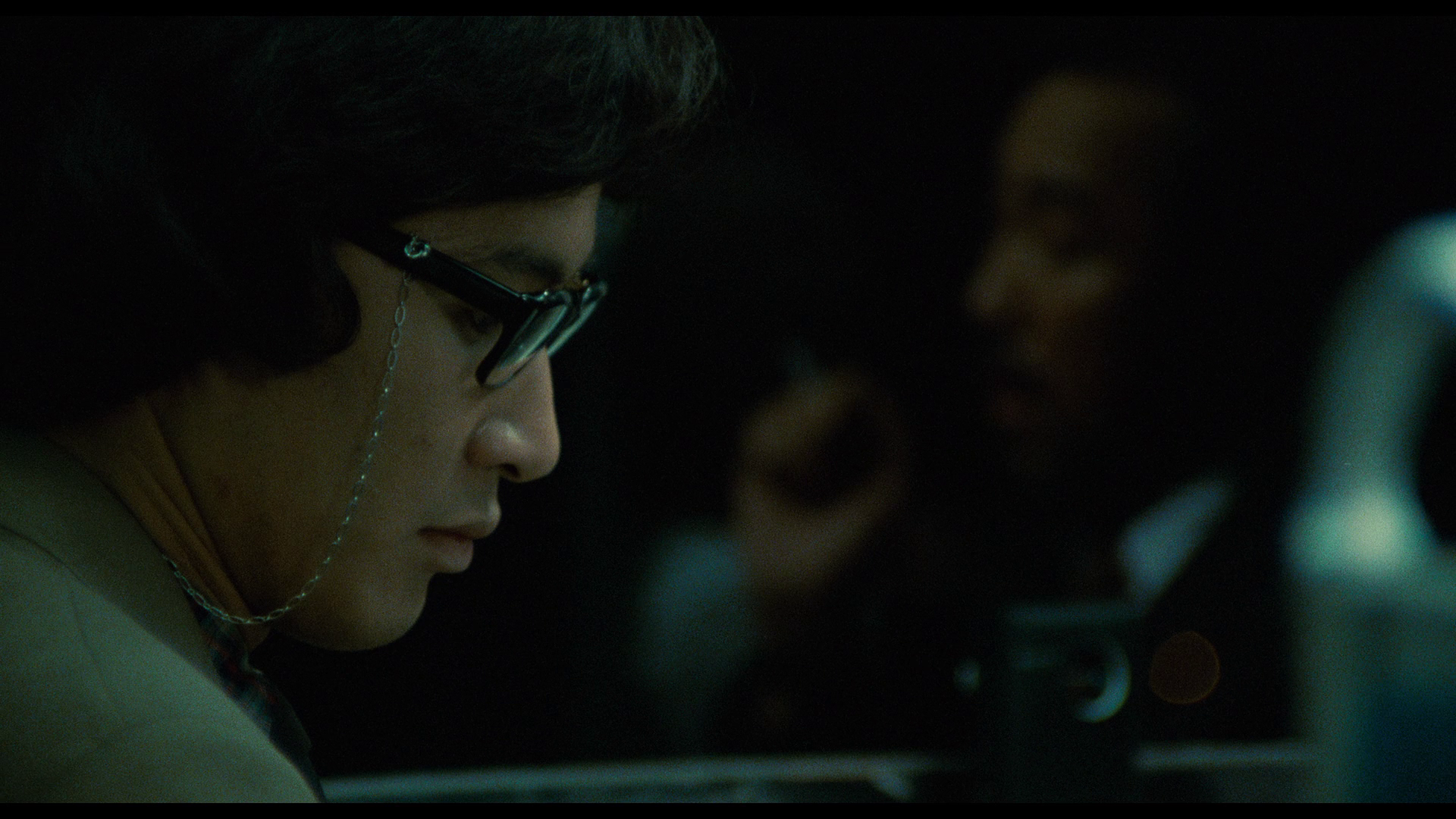
Back in the UK, the off-kilter continues to grab my attention. Screening at the ICA’s Celluloid Sunday Festival, Kaizo Hayashi’s To Sleep so as to Dream (1986) takes its eccentricity up into its form, essaying a world where the strange and the fantastic is commonplace, part of the texture of life, not something jarring that might inspire festival walkouts. That most ‘80s of genres, the postmodern detective story, our sleuths’ ostensible charge, tracking down the daughter of an aging film star, slips from a question of epistemology, what is there, to one of ontology, what is. A shift that produces a world that most resembles an unrestored movie, the filmic in decay — partial, intermittently mute, scratchy — which our leads take to unquestioningly, an adaptability that eludes the protagonist of Tōru Murakawa’s neo-noir, The Beast to Die (1980), screened at Bristol’s Cinema Rediscovered. A film that follows a former conflict journalist lost to PTSD-borne delusions without any of To Sleep… ‘s benign fabulist quality. Anchored by a sphinx-like Yūsaku Matsuda, his malaise turns outwards in increasingly spectacular and random acts of violence, prefiguring American Psycho (2000), the work of Kiyoshi Kurosawa and perhaps most simply, life in 2025. In its closing passages it hits a sustained operatic tenor, drawing us into the grim sublime before the eyes of our protagonist.
But self-immolation isn’t just for the boys. After stumbling from the timely The Beast to Die… the other picks of Bristol come in two portraits of women in trouble. Frank Perry’s Play It as It Lays (1972) follows Maria, a petite, mousy Californian via New York who drives a yellow Stingray and dabbles in the film industry. Adapted by Joan Didion and husband, John Gregory Dunne, from Didion’s own novel, Maria was not, according to Joan Didion, based on Joan Didion. New Hollywood-ish, from a frame narrative set in an asylum, she relates the episodes that sent her there. Chicly dissociative, emblematic of a post-‘68 ennui, it remains resolutely suspended, freewheeling uneasily like Maria in her yellow Corvette, one hand on the wheel, the other firing her handgun aimlessly into the California desert — until, suddenly, it doesn’t.
Rose la rose, fille publique (1986) begins further from the asylum, with Gallic loquacity replacing Californian remove, but ends just as dismally. Directed by Paul Vecchiali, it’s a distinctly French tale: a hooker with a heart of gold is crushed by an uncaring world, told with a waltzing camera glommed from Ophuls, and a levity borrowed from Demy. Vecchiali is better known as a producer responsible for bringing works by queer and women filmmakers, such as Jeanne Dielmann (1975) and Simone Barbès ou la vertu (1980), to the screen through his production company, Diagonale. Accordingly, Rosa la rose centres on the fleeting joy of its protagonist who exists as vibrant flesh and blood — not at all like one of Godard’s sociological billboards — desirous beyond the need to soothe the troubled consciences of men, and depicting expressions of sexuality at turns vulnerable and playful, beyond the necessity of financial exchange. A blooming baroque of colour, it is one of the most visually pleasurable films I saw over the summer.
Both films are untidy and reluctant, pushing against expectation. Their prominence at Bristol, like all repertory scenes, courting an increasingly young crowd, is notable for the quality of their heroines. Squint and Play It as It Lay’s Maria could be taken as one of the last decade’s Messy Women, but ultimately she’s too dissociative, passive all the way to the asylum, to deliver the necessary if muddled declarations against the patriarchy associated with the mode. Rosa, not the sad, downtrodden hooker of literary and cinematic convention, is neither the girl-bossy sex worker, entirely liberated in body and mind by a job like any other — she at least temporarily thinks she is, until the possessiveness and violence of her johns convinces her and us otherwise.
The programming at Bristol is less insulated from the commercial than Ritrovato, something that narrows its offerings but gives it the benefit of a closer relation to the zeitgeist, or at least whatever boutique DVD companies think can be profitable. Rosa la Rose’s, restoration, like The Beast to Die’s, are both sold through Radiance Films — handsomely packaged, a his-and-hers offering — while Play It as It Lays’ restoration arrived in Bristol after a tour of North America, presumably performed by Universal Pictures with less than entirely philanthropic motives. The audiences the films pull in Bristol, and the presumed commercial (boutique) potential seen in their home releases feels notable for works that ask such pessimistic questions on sex and feminism without providing concrete answers — or the and direct provocation of Daddy, contemporary to Play It as It Lays — even if Joan Didion and anything with even the faint imprimatur of the Nouvelle Vague will always sell.
Back in London for good, I caught the opening night of Close-Up’s three-date engagement with Stan Brakhage’s Anticipation of the Night (1958). Like his contemporary Warhol, Brakhage’s work explores potential unique to the medium beyond the capture of dramatic performance or adaptation of novels. In both there is a shared gesture towards deauthoring the image, making the intentional seem happenstance. What occurs in Warhol through a seemingly disinterested machinic reproducibility, takes form in Brakhage through an exploration of looking rendered organic, pre-social and distracted, free of spatial orientation: compromising the infallibility of the camera to produce something that has the texture and imperfections of sight, the texture of looking, or at least remembering or even thinking about looking.
That is to say, they’re tough sells, and without the celebrity of Nico to call on. They are however, in that medium specificity and tactility, exactly the kind of thing you have to see on a screen and in the dark. And so, like Warhol’s Chelsea Girls back in the height of summer, the film’s screenings over three nights are all sell-outs. Along with the return of Close-Up’s Liberated Film Club, it bodes well for a kind of cinematic culture waylaid by COVID and its long shadow. The film’s startling brevity (it ends, like a dream, far more suddenly that you anticipate, clock time unmoored from the experiential) on the night I attended at least, encouraged hangers-on to congregate out on the pavement for discussion on what we’d just seen —in the screening someone is taken ill, hurriedly excusing themselves through the cinema’s narrow aisles a short while in — and so the far end of Slater Street is, temporarily, transformed into an Italian side street, a communal space welcoming conviviality, proving there’s a committed audience willing to be stretched intellectually, even to the point of the breakdown of involvement.